
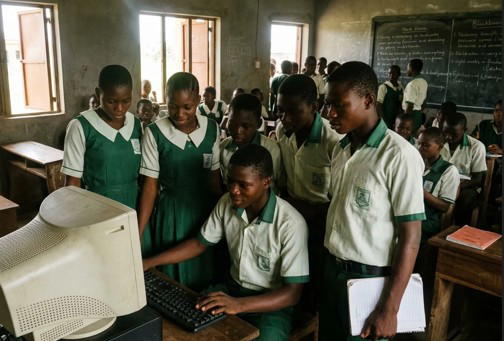
*The selected teams are developing solutions across education, agriculture, healthcare, financial inclusion and clean energy
Fifty innovation teams from all 36 states and the Federal Capital Territory, FCT, have been selected for the Regional Demo Days of the Universal Service Provision Fund, USPF, Changemaker Challenge.
The six virtual Demo Days, covering Nigeria’s six geopolitical zones, ran from 25 to 27 November 2026. One team from each zone will advance to the physical National Demo Day in Lagos, where the six finalists will compete for a share of the ₦10 million prize pool.
Most of the selected teams are past the idea stage. By their own account, 46 of the 50 have a working prototype or better, and 12 already have products in use. Many are building for places where internet access, steady power or a smartphone cannot be taken for granted, with tools that work offline or through basic mobile phones, USSD, SMS and voice services, in at least seven Nigerian languages.
Education and agriculture make up most of the 50
More teams are working on education than any other sector: 21, followed by agriculture with 14. Healthcare has seven teams, financial inclusion has five, while clean energy has three.
The education teams include MorningStack from Abia, Truststack Learning Bridge from Akwa Ibom, ClassBridge AI from Anambra and Chalk Labs from Bayelsa.
Others are Afara.AI from Borno, Sabi Coders AI from Delta, KaratuBox from Jigawa, LearnBridge Hub from Kogi, RoboRift, Lux and Learnium from Lagos, EduSign from Ondo, Ellai and KLASYNC from Oyo, Koyo from Taraba, ReadBuddy and SabiLab from the FCT, HausaLearn and EduMap from Kebbi, Alethris from Kaduna and Symbal from Nasarawa.
The agriculture category includes AgriVault from Bauchi, AgriFlow-ai from Benue, AgriSense Sentinel from Gombe, Chigari AgriConnect from Kaduna, HarvestLink from Kwara, Protibox from Nasarawa, Juti from Ogun, Clisense from Osun, AgbeAI from Rivers, Albasa Connect from Sokoto, FUGA-Crop Guardian Robot from Yobe, Olpa.ng from Bayelsa, Livestocx from Plateau and VetConnect Rural from Kebbi.
Their solutions address challenges including access to market information, crop monitoring, livestock management and weather warnings. Chigari AgriConnect, for instance, provides farmers with market prices through USSD and Hausa voice services. Albasa Connect offers advice to onion and garlic farmers in Hausa and French, while Clisense sends flood warnings up to 72 hours before expected flooding.
The seven healthcare teams are DocFind from Ebonyi, MedBit from Ekiti, PHC Referral Pass from Enugu, NutriGenie from the FCT, LabUnite LIS and MotivAid from Kano, and Virtual Safe Space from Katsina.
Their solutions cover healthcare information, medical laboratory services, maternal health and support for frontline health workers. MotivAid, for example, is designed to help maternity ward staff recognise and respond to emergencies.
Financial inclusion has five teams: EasyFinance NG and Reklaima from Adamawa, Gorro from Cross River, BridgePay from Niger and Saufah Connect from Zamfara. Gorro digitises traditional group savings arrangements such as ajo and esusu, while Reklaima helps users spot wrongful or excess bank charges.
The clean energy category includes Iron Ore Energy from Edo, GridSense from Imo and CTNApp from Plateau. Their work covers energy storage, electricity monitoring and the management of shared solar power systems.
Women-led teams and local languages
Women lead 12 of the 50 selected teams, representing 24 per cent of the shortlist. They lead three of the seven healthcare teams and six of the 21 education teams, with women-led teams represented across all six geopolitical zones.
The selected innovations also include support for at least seven Nigerian languages: Hausa, Yoruba, Igbo, Nigerian Pidgin, Igala, Ebira and Nigerian Sign Language.
How the teams were selected
The selection used a 37-plus-13 model. Each of the 36 states and the FCT received one place for its highest-scoring qualifying team. The remaining 13 places went to the next highest-scoring teams nationwide.
Under this arrangement, 27 states have one team each, while Adamawa, Bayelsa, Kaduna, Kano, Nasarawa, Oyo and Plateau have two each. Kebbi, Lagos and the FCT have three teams each.
Entries were assessed on how well they addressed the identified problem, whether the solution worked at its current stage, its potential impact and the team’s readiness. There were no sector quotas, and each solution was judged at its own stage of development, from technical design to live product.
Tobiloba Gomes, Programme Manager at Ubulu Africa, said: “What stood out across the shortlist was how many teams designed for the phones people already own, not the ones we wish they had. That is a practical instinct, and it is exactly what the Challenge is here to back.”
Odiong Akpan, Chief Executive Officer of Ubulu Africa, said: “Good ideas in Nigeria have never been confined to a few big cities, and this list proves it. Many of these solutions run on a basic phone, in a local language, with no internet. Those aren’t compromises. That is what building for Nigeria looks like.”
The top three national winners will receive ₦5 million, ₦3 million and ₦2 million respectively. All six finalists will also take part in a four-week structured incubation programme starting in January 2027, and each team will retain 100 per cent ownership of its intellectual property.
The USPF Changemaker Challenge is an initiative of the Universal Service Provision Fund (USPF), which works to expand access to digital services across Nigeria. It is delivered by Ubulu Africa.


No comments yet. Start the conversation.