
…As corporate governance confab holds Nov. 19
By Providence Ayanfeoluwa
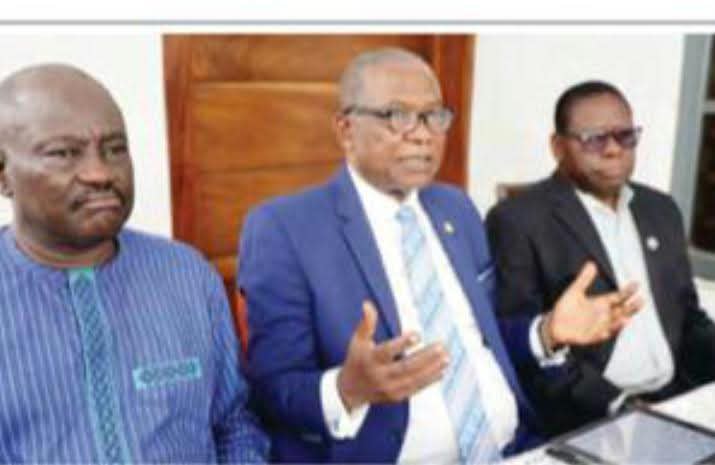
The President of Association of Corporate Governance Professionals of Nigeria, ACGPN Mazi Sam Ohuabunwa, has called for a fundamental shift from superficial regulatory compliance to an institutional culture anchored on ethics, accountability and effective governance, declaring that Nigeria’s greatest challenge is not the absence of laws but failure to implement them faithfully.
He maintained that Nigeria had accumulated sufficient laws and policies but continued to struggle with implementation, institutional weaknesses and poor public accountability. He described the country as being at a crossroads, characterised by substantial public budgets but disappointing outcomes, weak institutions and declining public trust.
Ohuabunwa said these would form the central focus of the 8th edition of the Annual National Corporate Governance Conference of the ACGPN with under the theme, “From Compliance to Culture: Embedding Ethics in Nigerian Organisations,” scheduled for November 19 in Abuja.
He described the country as being at a crossroads, characterised by substantial public budgets but disappointing outcomes, weak institutions and declining public trust.
According to him, compliance in many Nigerian organisations remains inconsistent and is often treated as an exercise in ticking boxes rather than a genuine commitment to ethical conduct. He stressed that the objective should be to make integrity and accountability natural institutional values rather than obligations observed only when regulators demand them.
Ohuabunwa identified accountability as one of the country’s most pressing governance challenges, arguing that Nigeria’s problem was not necessarily a shortage of revenue but the inability to account properly for available resources. He expressed concern over public expenditure, revenue leakages, political spending and the growing financial burden on citizens, insisting that public money must produce public value rather than serve the private interests of political office holders and their associates. He called for stronger scrutiny of government spending and greater transparency in the management of national resources.
On institutional governance, he criticised the weak oversight functions of boards and public institutions, arguing that some governing boards and legislative committees operate more like rubber stamps than independent accountability mechanisms. He illustrated the problem with situations where officials responsible for overseeing government agencies allegedly receive financial and logistical support from the same institutions they are expected to scrutinise. Such arrangements, he said, undermine independence and compromise the credibility of oversight activities.
He also called for a stronger quality-management culture in the public service, advocating a transition from routine service delivery to measurable, development-oriented outcomes. He maintained that the performance of public institutions should be assessed by the value they create for citizens rather than the size of their budgets or the number of activities undertaken. A hospital, for instance, should be judged by the quality of treatment patients receive, while schools should be assessed by the standard of education they provide rather than the infrastructure they possess.
The ACGPN leader urged public officials to regard public office as an opportunity for service rather than personal enrichment, while calling on private sector organisations to look beyond profit maximisation and embrace environmental, social and governance principles. He emphasised that sustainable corporate governance must incorporate job creation, wealth generation, social responsibility and long-term institutional stability. He further urged Nigerians to demand accountability from leaders, noting that good governance thrives when citizens actively question public institutions and insist on responsible leadership.
Addressing the structure of the forthcoming conference, Ohuabunwa disclosed that the one-day event would hold in Abuja on November 19, 2026, with both physical and virtual participation to accommodate members and stakeholders facing financial and travel constraints. The association is expecting more than 1,000 participants, including board chairmen, directors, chief executives, managing directors, government officials, regulators, company secretaries, auditors, lawyers, academics, civil society organisations and corporate governance professionals. The programme will feature a keynote address, three high-level panel sessions focusing on accountability, quality management, ethics and public values, as well as the induction of new members and fellows.
He further disclosed that the association would present its corporate governance policy recommendations to relevant government institutions, including the Presidency, National Assembly and regulatory bodies, as part of efforts to influence governance reforms and strengthen institutional accountability. He said the conference would also provide networking opportunities for professionals and stakeholders committed to improving governance standards across public and private institutions.
Ohuabunwa called on the media, civil society, government agencies and private organisations to support the association’s campaign for a governance culture that places integrity, transparency and public value at its centre. He stressed that corporate governance should not be restricted to large corporations or senior executives but should extend to small businesses and individual enterprises. Describing ACGPN as a conscience of governance in Nigeria, he urged citizens to make accountability a national demand rather than a periodic subject of public debate, adding that the November 19 conference would provide a platform for advancing the institutional reforms needed to build a more accountable and sustainable Nigeria.



No comments yet. Start the conversation.