
By James Ogunnaike, Abeokuta
African leaders, diplomats, policy experts and development advocates have called for stronger continental cooperation, independent institutions and home-grown development strategies, warning that Africa risks becoming a battleground for competing global interests, unless it builds the collective capacity to defend and advance its strategic priorities.
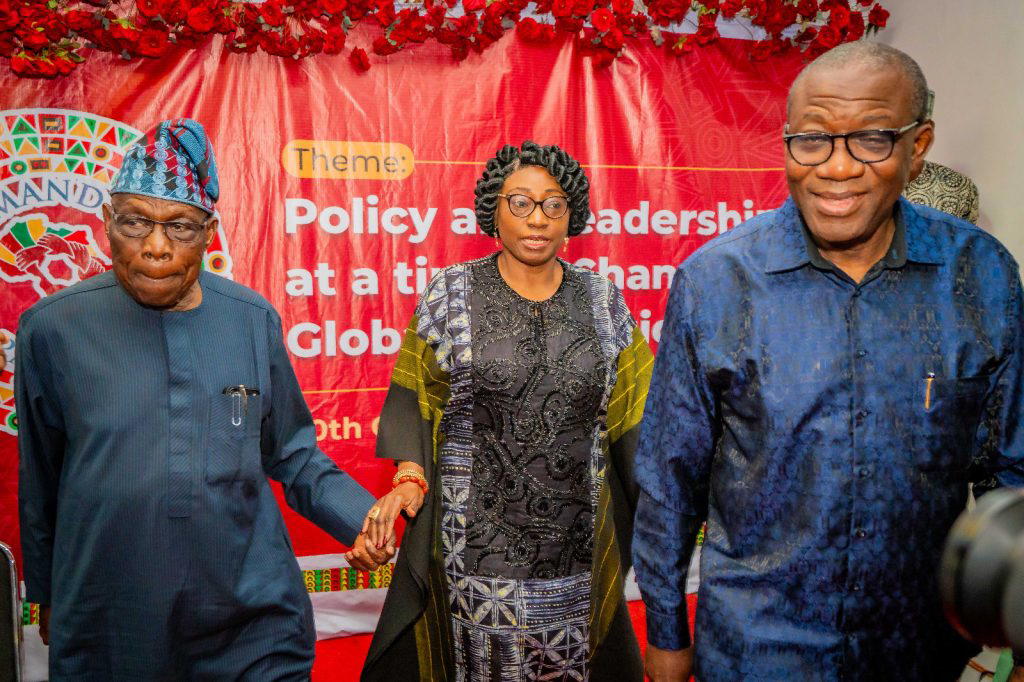
The warning was contained in a communiqué issued at the end of the maiden Amandla Parapọ̀, the flagship policy and leadership retreat of the Amandla Institute for Policy and Leadership Advancement (AIPLA), held from October 30 to November 1, 2026, at the Amandla Conference and Resort, Ilishan-Remo, Ogun State.
The retreat, supported by the Open Society Foundations (OSF), brought together former African leaders, diplomats, scholars, researchers, Pan-Africanists, civil society organisations and development practitioners to examine the implications of shifting global geopolitics for Africa’s political, economic and institutional future.
Former President Olusegun Obasanjo attended the gathering as distinguished special guest.
The communiqué identified Africa’s vast arable land, critical transition minerals, rare-earth deposits, strategic maritime corridors and youthful population as significant assets that could enhance the continent’s influence in the emerging global order.
It, however, expressed concern that Africa remained inadequately positioned to protect and maximise these advantages amid intensifying competition among major, middle-ranking and emerging global powers for resources essential to the green energy transition, technological advancement and digital transformation.
The participants consequently stressed that Africa must move beyond fragmented national responses and develop stronger continental institutions, coordinated policies and collective bargaining mechanisms to safeguard its interests.
The challenge of building an independent African development framework featured prominently in the opening address by Erelu Bisi Adeleye-Fayemi, Co-founder and Chairperson of the AIPLA Governing Board.
Fayemi challenged participants to move beyond diplomatic rhetoric and confront the structural challenges undermining Africa’s development, insisting that the continent could not achieve genuine sovereignty through dependence on externally determined priorities, imported policy prescriptions and borrowed capital.
Drawing on her experience as co-founder of the African Women’s Development Fund (AWDF), she highlighted the influence external funding could exert on the priorities, institutional independence and ambitions of African organisations.
She called for stronger African institutions, increased domestic financing and greater ownership of development agendas, arguing that the continent must possess the capacity to determine its own priorities rather than depend excessively on external interests.
Fayemi also emphasised the importance of intergenerational leadership, describing it as an institutional necessity rather than merely a question of representation.
She urged African institutions to create meaningful opportunities for young thinkers, emerging scholars and civic innovators to participate in policy formulation and leadership, while ensuring that institutional memory, ethical standards and strategic discipline were transferred across generations.
On continental integration, she maintained that no African country, regardless of its size, economic strength or natural resources, could effectively negotiate with major global powers in isolation.
She therefore called for the practical implementation of the African Continental Free Trade Area (AfCFTA), the African Mining Vision and the African Union’s Agenda 2063.
She also advocated a decisive shift from exporting raw materials to developing local industries capable of processing Africa’s natural resources and retaining greater economic value within the continent.
The communiqué placed Africa’s current challenges within the context of the continent’s political and institutional evolution, recalling the renewed Pan-African momentum of the 1990s and early 2000s.
That period witnessed the transformation of the Organisation of African Unity (OAU) into the African Union (AU), alongside the emergence of initiatives such as the New Partnership for Africa’s Development (NEPAD) and the African Peer Review Mechanism (APRM), designed to strengthen continental cooperation, governance and economic development.
Participants called for a revival of the political commitment and collective ambition that informed those initiatives.
They identified Nigeria, South Africa, Algeria, Egypt, Ethiopia and Senegal as countries with significant responsibilities in providing the leadership required to renew Africa’s collective direction and strengthen its position in international affairs.
The gathering maintained that Africa’s ability to influence global developments would depend largely on the willingness of its political leaders to place collective continental interests above narrow national considerations.
Governance and democratic accountability also featured prominently in the deliberations, with participants expressing concern over declining public confidence in democratic institutions and growing disillusionment with prevailing governance models.
The communiqué observed that sections of Africa’s youthful population were increasingly dissatisfied with political systems that had failed to translate democratic participation into improved living conditions, economic opportunities and accountable leadership.
It called for governance approaches that reflected Africa’s historical and cultural realities, accommodated the continent’s diversity and delivered tangible benefits to citizens.
The participants also advocated the emergence of a new generation of African leaders committed to Pan-African ideals, responsible public service, institutional accountability and the revitalisation of continental institutions.
They stressed that democracy must be strengthened through institutions capable of responding to citizens’ aspirations rather than treated merely as a political or electoral process.
On security, the conference examined the persistence of armed conflicts, violent extremism, banditry and organised criminal networks across different parts of the continent.
It noted that the increasingly transnational nature of these threats had exposed the limitations of isolated national responses, making stronger regional and continental cooperation imperative.
The communiqué consequently called for more effective conflict-management structures, improved intelligence and operational coordination, sustainable security financing and the strategic application of technology.
Participants also stressed that military and security interventions alone would not provide lasting solutions unless governments addressed the underlying political, economic and social conditions driving insecurity.
They advocated a comprehensive approach that combined effective security institutions with inclusive governance, economic opportunities and stronger regional partnerships.
Economic transformation, particularly the role of the private sector and the informal economy, was another major focus of the retreat.
The communiqué recognised African businesses, entrepreneurs and informal-sector operators as critical drivers of economic growth, employment generation and industrial development.
However, it expressed concern that these economic actors remained inadequately supported and protected by national governments.
It called for a more productive partnership between the public and private sectors, urging governments to establish an enabling environment for investment, local production, industrialisation, agricultural processing and job creation.
On natural resources, participants argued that Africa must move beyond its traditional role as a supplier of raw materials to global industries.
They advocated collective bargaining with international partners to secure technology transfer, local processing capacity and greater economic returns from the continent’s strategic mineral deposits.
The communiqué maintained that Africa’s mineral wealth should become a foundation for industrial development and economic sovereignty rather than another source of external dependency.
The rapid development of artificial intelligence (AI) and other emerging technologies was also identified as a defining issue in the global competition for economic power, security and political influence.
Participants warned that Africa could suffer further marginalisation if it failed to invest adequately in technological innovation, digital infrastructure and the skills required to compete in the emerging global economy.
They recommended increased investment in relevant education, research and innovation, as well as the development of shared regional AI infrastructure.
The gathering also called for stronger collaboration between African governments, universities, research institutions and private-sector organisations to build indigenous technological capabilities.
It stressed that collective engagement with global technology companies and resource-consuming economies would be necessary to secure knowledge transfer and ensure that Africa obtained greater value from its critical minerals.
The question of financing Africa’s development and institutional renewal also attracted considerable attention.
Against the backdrop of declining international development assistance and philanthropic funding, the communiqué urged African countries to strengthen domestic resource mobilisation and develop sustainable funding mechanisms for their institutions.
It advocated the establishment and expansion of home-grown philanthropic organisations capable of supporting leadership development, policy research, civic engagement and long-term institutional growth.
Participants called for greater reliance on African traditions of giving, solidarity and good neighbourliness as foundations for sustainable development financing.
They argued that institutions entrusted with shaping Africa’s future must have sufficiently independent funding sources to protect their intellectual freedom, strategic direction and accountability to African communities.
To translate the conference’s deliberations into practical action, the communiqué directed its recommendations to national governments, Regional Economic Communities (RECs), Regional Mechanisms (RMs) and relevant institutions of the African Union.
It called for national development strategies to be aligned with AU Agenda 2063, ECOWAS Vision 2050 and other regional development frameworks.
It further emphasised the need to move beyond policy declarations towards effective implementation through the AfCFTA and other continental integration mechanisms.
The participants also stressed that subnational governments, local authorities and grassroots communities must be meaningfully involved in development planning and implementation.
According to the communiqué, sustainable continental transformation would require coordinated action across all levels of governance, supported by effective institutions, accountable leadership and adequate financing.
The three-day retreat featured thematic plenaries, executive fireside dialogues, a Grand Debate, keynote presentations, lunchtime and endnote addresses, as well as a special guest presentation by former President Obasanjo.
Discussions focused on several strategic issues, including defence governance, democratic trust in the Sahel and West Africa, mineral sovereignty, regional security and domestic financing for African institutions.
The gathering attracted representatives of prominent African and international development, research and philanthropic organisations, including the Thabo Mbeki Foundation, TrustAfrica, MacArthur Foundation, Ford Foundation and the Council for the Development of Social Science Research in Africa (CODESRIA).
Scholars and researchers from leading universities across Africa and beyond also participated alongside diplomats, senior policymakers, security experts, private-sector leaders and civil society representatives.
The diversity of participants provided an opportunity for engagement across diplomatic, academic, political, security and development perspectives on the challenges confronting Africa.
In its concluding position, the communiqué reiterated that no African country could effectively negotiate with major global powers in isolation, stressing that collective continental action remained essential to protecting Africa’s interests in an increasingly competitive international environment.
It called for the recommendations to be communicated to relevant national authorities, regional institutions and continental bodies, with particular emphasis on strengthening the AfCFTA, the African Mining Vision and AU Agenda 2063.
The central message of the maiden Amandla Parapọ̀ was that Africa must urgently develop the leadership, institutions, financial independence and collective political will required to determine its own development priorities.
The participants maintained that the continent’s vast natural resources, demographic advantage and strategic geographical position would count for little without the institutional capacity to harness them for the benefit of its people.
As competition for resources, technological influence and geopolitical advantage intensifies globally, the communiqué warned, Africa’s future will depend increasingly on its ability to speak with a common voice, negotiate from a position of strength and pursue development strategies rooted in its own priorities.
The gathering therefore called for a renewed Pan-African commitment to collective action, institutional independence and strategic self-determination, insisting that Africa must become an active shaper of the emerging global order rather than a passive arena for competing external interests.



No comments yet. Start the conversation.