
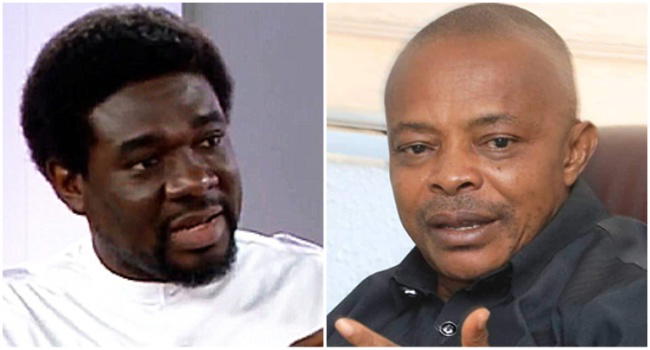
Former Deputy President of the Nigeria Labour Congress (NLC), Comrade Joseph Iranola Akinlaja, has called on the leadership of the NLC and the Trade Union Congress (TUC) to embrace dialogue and reconciliation amid growing tensions between the two labour centres.
Akinlaja warned that the public disagreement between NLC President, Joe Ajaero, and TUC President, Festus Osifo, could weaken organised labour’s collective struggle for improved workers’ welfare.
He made the appeal on Wednesday night, November 4, 2026, against the backdrop of disagreements over the implementation of the N70,000 minimum wage, transport allowances and labour representation in negotiations with government and employers.
The former labour leader urged both organisations to prioritise the interests of Nigerian workers above institutional rivalries and personal differences.
According to him, the labour movement has recorded its greatest achievements when its leaders worked together in pursuit of common objectives.
“The strength of labour has never been in individual personalities or institutional supremacy. Its strength lies in unity, solidarity and a shared commitment to the interests of workers,” he said.
Akinlaja noted that the prevailing economic challenges, including rising living costs, inflation and declining purchasing power, made unity among labour organisations more imperative.
He said labour leaders should concentrate their efforts on securing better wages, improved welfare packages and decent living conditions for workers rather than engaging in public disagreements.
Drawing from the history of organised labour in Nigeria, Akinlaja recalled that workers’ unions recorded significant victories during the colonial and post-independence eras through collective action.
He cited campaigns for the implementation of Cost of Living Allowances (COLA), noting that such struggles achieved results largely because unions spoke with one voice.
He also acknowledged the contributions of the late Michael Imoudu, a prominent labour leader and nationalist popularly known as Labour Number One, who led the Railway Workers Union and played a leading role in the historic 1945 general strike against British colonial rule.
Akinlaja further referenced the Udoji Salary Review of the 1970s, which brought significant salary increases and arrears payments to public servants, describing it as one of the landmark developments in Nigeria’s labour history.
He maintained that current demands for improved wages and workers’ benefits were consistent with the longstanding struggle for fair compensation and decent living standards.
However, he cautioned that disagreements over workers’ welfare should not degenerate into public confrontations, name-calling or unhealthy competition between labour organisations.
“The current campaign for improved worker welfare is justified, but it should not result in rancour, personal attacks or a contest over influence. Such divisions only weaken labour’s ability to negotiate effectively and achieve meaningful results for workers,” he said.
The former NLC deputy president warned that divisions within organised labour could provide opportunities for government and employers to exploit differences among unions and undermine workers’ bargaining power.
He urged the modern labour movement to resist divide-and-rule tactics through collaboration and mutual respect.
Reflecting on his experience in the oil and gas sector and as former General Secretary of the Nigeria Union of Petroleum and Natural Gas Workers (NUPENG), Akinlaja cited the longstanding cooperation between NUPENG and the Petroleum and Natural Gas Senior Staff Association of Nigeria (PENGASSAN) as an example of effective labour solidarity.
He said the partnership, popularly known as NUPENGASSAN, had demonstrated the benefits of coordinated action and shared objectives in advancing workers’ interests.
“In the oil and gas industry, we established a culture of joint struggle and collective engagement through NUPENG and PENGASSAN. That collaboration has endured over the years because both organisations understood that workers benefit more when labour leaders work together,” he explained.
Akinlaja also recalled the history of cooperation between the NLC and TUC, citing the tenures of former NLC President, Adams Oshiomhole, and former TUC President, Shina Luwoye.
He said both labour centres strengthened their relationship during the period through joint National Executive Council meetings, coordinated May Day celebrations and collective negotiations on issues affecting workers and the wider population.
According to him, the cooperation helped organised labour maintain a united position on critical national issues and secure concessions from government and employers.
He urged Ajaero and Osifo to sustain the legacy by resolving their differences through constructive engagement rather than public exchanges.
“Nigerian workers expect collaboration, not conflict. The issue should not be who has greater visibility or influence. The real challenge is how labour can secure better wages, improved welfare, economic justice and a better quality of life for millions of workers,” he said.
Akinlaja also called on affiliate unions, labour veterans and other stakeholders to support efforts to reconcile the two labour centres.
Describing the disagreement as a defining moment for organised labour, he warned that prolonged division could erode decades of solidarity built by previous generations of union leaders.
“This is a time for bridge-building, not division. The NLC and TUC must close ranks, strengthen cooperation and present a united front in defending the interests of Nigerian workers and contributing to national development,” he said.
He maintained that unity remained organised labour’s strongest weapon, urging both centres to embrace dialogue, cooperation and a common front in advancing workers’ welfare and national development.



No comments yet. Start the conversation.