
By Michael Sheldrick
From polio eradication to anti-Apartheid advocacy, the Commonwealth has shown what cooperation can achieve. The real test is whether its latest promises on electrifying small island nations improve people’s daily lives long after the ceremony has concluded.
A Commonwealth summit can have all the trappings of a bygone era, from the opening ceremony to the family photograph. If you live in Antigua and Barbuda, you might look at the flags, the motorcades and the road closures and wonder what will be left now that everyone has gone home. After all, for most working families, that is the only test that really matters. Not who attended or how many communiqués were issued, but what will change in people’s daily lives because everyone came together for a few days?
A chance to power the Eastern Caribbean
One promising answer emerged at the summit in the form of a new Eastern Caribbean Alliance that could help make electricity more affordable and reliable across the region. Signed in the presence of King Charles III, the agreement brings together Octopus Energy, the Organisation of Eastern Caribbean States, the Eastern Caribbean Central Bank, the Sustainable Markets Initiative and international advocacy organization Global Citizen. The aim is to help island nations attract the investment needed to expand renewable energy and reduce their dependence on expensive imported fuel.
The need is clear. While many wealthier countries can draw electricity from large power grids and a mix of energy sources, small island nations often have little choice but to import expensive fuel to keep the lights on. According to the International Energy, generating electricity on islands can cost up to ten times as much as on the mainland. And when global fuel prices rise, families feel the impact. In Antigua and Barbuda, the national electricity provider saw its monthly fuel bill almost double between January and July this year. By October, households were facing another increase their electricity bills. For families already juggling the cost of food, transport and other essentials, that’s money they have to find elsewhere.
The good news is that there is an easy way to reduce that dependence on imported fuel. The Caribbean has abundant sunshine and wind, and the technology to turn both into affordable electricity already exists. Combined with batteries that store power for when the sun isn’t shining or the wind isn’t blowing, renewable energy offers islands a way to make their electricity more reliable and less vulnerable to global fuel prices. Yet progress has been slow. An October 2026 analysis by energy think tank Ember found that renewables supplied just 9.1 percent of electricity across 13 Caribbean countries in 2024, despite examples of new renewable power contracts coming in cheaper than fossil fuel alternatives.
To its credit Antigua and Barbuda has already set an ambitious goal to generate 86 percent of its electricity from renewable sources by 2030. The challenge is finding the investment to turn that goal into reality. Small, isolated electricity systems can struggle to attract investment on
affordable terms, while grid upgrades, financing and regulation all affect whether savings ultimately reach consumers.
This is where the Eastern Caribbean Alliance comes in. Working through the Organisation of Eastern Caribbean States (OECS) whose members include Antigua and Barbuda, Dominica, Grenada, Montserrat, St. Kitts and Nevis, St. Lucia and St. Vincent and the Grenadines, the partners hope to bring renewable energy projects together across the region, creating the scale needed to attract investments. By exploring projects across several islands together, they aim to pool expertise and reduce costs for renewable power, battery storage and electric transport.
This is still an exploratory alliance; its success will depend on identifying viable projects and getting finance into them.
That regional perspective was also reflected in Antigua and Barbuda’s energy priorities, as outlined by Energy Minister Melford Nicholas at January’s IRENA Assembly. The transition, he emphasized, must reduce the country’s exposure to volatile imported fuel, strengthen electricity infrastructure against hurricanes and other climate impacts, and attract financing suited to the realities of small island states. For Caribbean families, renewable energy is not only a climate goal; it is also about more secure power and less exposure to global fuel price shocks.
In the end, families will know whether this partnership has succeeded if new projects eventually make their electricity bills less vulnerable to global oil prices. That will require more than installing solar panels: the financing, grid connections and pricing arrangements must also allow the benefits to reach customers. Reliable power means a child can keep the light on to finish their homework. It means a midwife can count on the lights and equipment staying on when a mother is giving birth.
Lessons from another island
The alliance is also set to learn from work already underway elsewhere in the Commonwealth. Thousands of miles away from Antigua, Sherbro Island in Sierra Leone offers a practical example of what it takes to build a cleaner electricity system. There, Octopus Energy, the Elba Hope Foundation and their partners launched the Hope Power Project to bring reliable electricity to Bonthe and surrounding communities. The project was originally due for completion in March 2026 and, as of writing, all five wind turbines are now in place with solar and battery systems nearing completion. Once fully operational, the mini-grid is designed to serve about 14,000 people across nearly 1,300 homes and more than 120 businesses and public buildings.
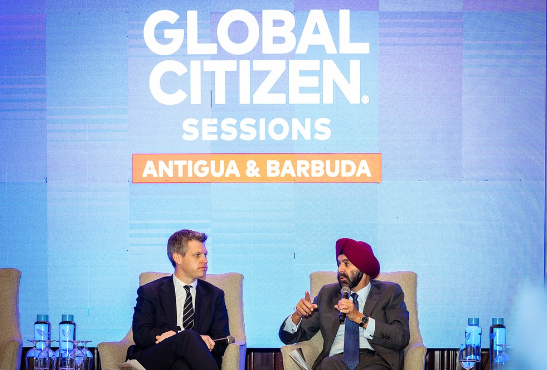
It was fitting, then, that Sierra Leone’s Chief Minister, David Moinina Sengeh, was on hand at the Global Citizen Sessions event in Antigua and Barbuda during the Commonwealth summit to share what Sierra Leone had learned with the country’s energy minister, Melford Nicholas.
Nicholas joked that Antigua and Barbuda would get there faster than Sierra Leone, while Sengeh stressed the importance of turning ambition into rapid delivery to meet its citizens’ expectations. It was a moment of friendly rivalry between leaders on opposite sides of the Atlantic, united by the same challenge: getting reliable electricity to their communities.
From promises to delivery
As Sengeh put it during the Global Citizen Sessions, we must all collectively count ourselves as part of “Generation D”, regardless of age, with the D standing for delivery. It is a useful challenge to every institution that claims to bring people together. The Commonwealth has shown before that it can help turn collective ambition into action. Its members helped rally international pressure against apartheid. The 1985 Nassau Declaration called for restrictions on lending, arms and oil trade with South Africa, and several Commonwealth governments subsequently imposed further measures, even as members disagreed over how far sanctions should go. At the 2011 summit in Perth, I was part of a campaign that helped secure $118 million in new funding for polio eradication. At the summit in Antigua and Barbuda, governments, businesses and campaigners found common ground around another practical goal: affordable, reliable electricity for island communities.
But an agreement is only the beginning. The real measure of this CHOGM’s success will come after the motorcades have gone, the flags have come down and attention has moved elsewhere. The Eastern Caribbean Alliance still needs to pursue projects, gather financing, build timelines and provide public reporting mechanisms that will show local communities measurable change.
Ultimately, the next time those flags go up for a Commonwealth summit in two years time, the families of Antigua and Barbuda should be able to point to lower electricity bills and lights they can count on.



No comments yet. Start the conversation.