
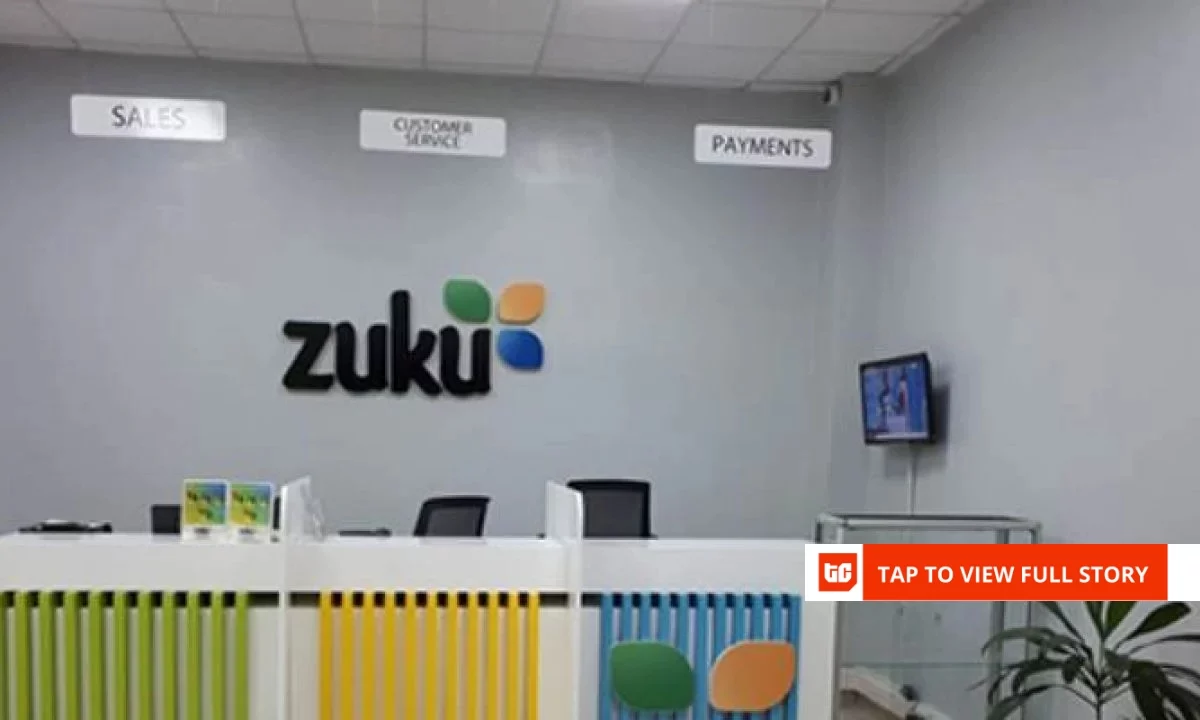
Zuku, the Kenyan home internet service provider (ISP) once dominant in Nairobi, is winning back subscribers with cheaper packages and faster speeds. But one year after Axian Telecom acquired its parent company, Wananchi Group, the business is still losing money. It posted a $2 million loss in the third quarter as revenue fell to $11.5 million.
The figures reflect the challenge facing Axian, the pan-African telecoms group that acquired Wananchi for $69.4 million. It bought a fibre network with an established customer base, but one that had lost ground to Safaricom and Faiba, and was already struggling financially.
Zuku is now cutting prices to win back subscribers in a market where Safaricom has more than a third of fixed-internet connections. The strategy is bringing customers back, but has yet to deliver a financial recovery.
Wananchi’s revenue fell by about a fifth from the first quarter, according to unaudited financial results published on Monday. Its quarterly loss narrowed from $3.9 million in the second quarter, but the group has accumulated $8.1 million in losses since January.
The results also cover Wananchi’s operations in Kenya, Tanzania, Uganda and Malawi.
Buying back market share
Zuku was once one of Kenya’s largest home-internet providers. It was among the first companies to wire Nairobi homes with fibre and, a decade ago, held about half of the country’s fixed-internet subscriptions. It now ranks third, according to the Communications Authority of Kenya.
Axian’s acquisition gave it an entry into a market where Safaricom has built a lead through its nationwide distribution network and growing fibre footprint.
Zuku’s response has been to make home internet cheaper and faster. In May, the ISP doubled speeds across its fibre packages without raising prices. Three months later, it cut monthly subscription rates on several plans.
The changes appear to be working. Zuku’s fixed-internet subscriptions grew 10.4% in the first half of 2026, with much of the increase coming after the speed upgrade, according to the communications regulator. This follows a difficult period in which Wananchi lost more than 24,000 internet and pay-TV subscriptions in the three months to September 2025.
The gains come as Kenya’s home-internet market expands. Fixed-internet subscriptions rose by about a third through June, while Safaricom crossed one million home-internet customers, more than Faiba and Zuku combined.
Yet more subscribers have not translated into higher revenue for Wananchi. Lower subscription prices are one explanation. The group also said weaker currencies in Tanzania and Uganda reduced the dollar value of its earnings.
Wananchi’s cost base makes the recovery harder. Network capacity, television content and bandwidth account for some of its largest expenses, alongside staff costs and depreciation. These costs continue to weigh on its financial performance even as it attracts more customers.
A costly acquisition
Axian agreed to buy 99.63% of Wananchi in August 2024 and completed the transaction on October 30, 2025, after securing regulatory approvals, including from the COMESA Competition Commission.
The $69.4 million acquisition price included just $8.3 million in cash paid to the sellers. The remainder settled a loan owed to the Development Finance Corporation (DFC), the US government’s development lender.
Wananchi’s liabilities exceeded its assets by $48.6 million when Axian took control. The sellers refunded $1.6 million in May after the parties agreed on the final acquisition accounts. In September, Axian also reduced the value it assigned to the acquired network.
“Management does not expect these conditions to be met, and therefore no accrual has been recognised,” the company said.
The acquisition was a small part of Axian’s wider business. Group revenue rose 17% to $525.5 million in the third quarter, driven by mobile and mobile-money growth in Tanzania and Madagascar. Wananchi contributed about 2% of that revenue.
Axian said the Wananchi deal, alongside a smaller fibre acquisition in Tanzania, was not material enough to require pro forma financial disclosures to bondholders.
“Given the value of revenue, gross assets, and adjusted EBITDA of the Wananchi Group and Aptus these acquisitions are not considered to be material acquisitions,” it said.
The group adopted the Yas name in September, replacing Axian Telecom as its operating brand. When the Wananchi deal closed, chief executive Hassan Jaber said the acquisition would support its ambition to expand broadband connectivity across Africa.
Zuku’s subscriber growth signals the acquisition is beginning to deliver on its commercial promise and turn those customers into sustainable revenue without relying on price cuts.



No comments yet. Start the conversation.