
By John Alechenu
The Nigerian Institute of Quantity Surveyors (NIQS) has raised concerns over the growing financial difficulties facing construction companies in the country, warning that the collapse of construction businesses could undermine efforts to address Nigeria’s housing and infrastructure deficits.
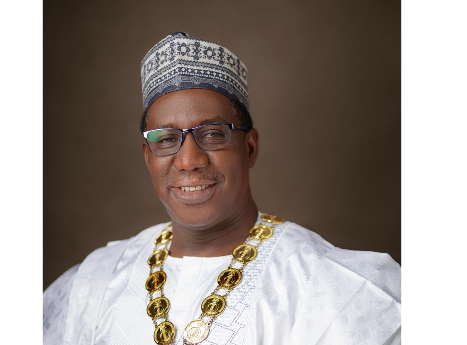
The President of NIQS, Dr Aminu Muhammad Bashir, raised the concern in Abuja on Wednesday at a press conference ahead of the institute’s 2026 National Conference and Annual General Meeting scheduled for November 16 to 20 in Ilorin, Kwara State.
Bashir said while building collapses remained a major concern, another form of collapse was taking place within the construction industry, with contractors, consulting firms and suppliers struggling to remain in business.
He said the development was being driven by unpredictable funding of public capital projects, delayed payments for certified work and prolonged project suspensions.
“There is no dust, no crowd gathers and no camera arrives. It is the gradual collapse of businesses in Nigeria’s construction industry.
“Housing finance will not deliver homes if the firms that build them are failing. Across the country, contractors, consulting firms and suppliers are under severe financial pressure from unpredictable funding of public capital projects, delayed payment for certified work and prolonged project suspensions,” he said.
The NIQS president warned that many of the affected businesses had taken decades to build, adding that their closure would lead to the loss of jobs, skills and technical capacity needed for future infrastructure development.
He appealed to the Federal Government and other public authorities to adopt realistic capital budgets backed by available funding, release appropriated funds on time, settle certified payments within contractual periods and prioritise the completion of ongoing projects before commencing new ones.
“Budgetary provisions alone do not build infrastructure. They must translate into actual funding, productive construction activity and completed projects,” he said.
On housing, Bashir said Nigeria’s housing deficit stood at nearly 15 million units, according to the National Housing Data Technical Committee.
He identified rising construction costs, expensive land, inadequate infrastructure and limited access to long-term financing as factors widening the gap between housing needs and affordability.
He said the challenge was not merely to build more houses but to ensure that the homes delivered were within the financial reach of Nigerians.
“A house cannot truly be described as affordable merely because it is cheaper to construct. Its cost must bear a reasonable relationship to the purchasing power of those for whom it is intended,” he said.
Bashir explained that housing affordability was determined by several factors before construction began, including design, feasibility, procurement, financing and cost management, areas in which quantity surveyors played important roles.
He welcomed the Nigeria Capital Market Masterplan 2.0 (2026–2036), launched last month, which places the capital market at the centre of long-term infrastructure financing.
According to him, housing bonds, real estate investment trusts and mortgage-backed securities could help mobilise the long-term capital required to address the country’s housing challenges.
However, he stressed that investor confidence would depend on transparency, reliable cost estimates and proper monitoring of project funds.
To address this, the institute proposed that independent cost certification and progress verification by registered quantity surveyors should become standard requirements for capital-market housing instruments.
He said NIQS would engage the Securities and Exchange Commission on the proposal.
The institute’s president also commended the Office of the Speaker of the House of Representatives and the House Committee on Housing and Habitat for a recent stakeholders’ conference on the proposed National Real Estate Regulatory Authority.
He said the proposed regulatory framework could strengthen consumer protection, developer accountability and investor confidence, particularly in off-plan property transactions where buyers make substantial payments before construction is completed.
Bashir identified the use of escrow accounts, with buyers’ payments released in stages based on independent valuation of completed work, as one practical safeguard against possible abuses.
He said NIQS supported a transparent regulatory framework, provided it complemented rather than duplicated the mandates of existing statutory professional regulatory bodies.
The 2026 National Conference and Annual General Meeting will bring together policymakers, financial institutions, capital-market operators, property developers and construction professionals to discuss sustainable housing finance.
The conference, themed, “Financing Sustainable Mass Housing: Synergising Cost Management and Capital Markets for Affordable Shelter in Nigeria”, will feature technical sessions, plenary discussions, professional development activities and the induction of new members.
The programme will culminate in the institute’s Annual General Meeting on Friday, November 20.
Expected speakers and participants include representatives of the Ministry of Housing and Urban Development, Shelter Afrique, the Federal Mortgage Bank of Nigeria, the MOFI Real Estate Investment Fund and Family Homes Funds Limited.


No comments yet. Start the conversation.