
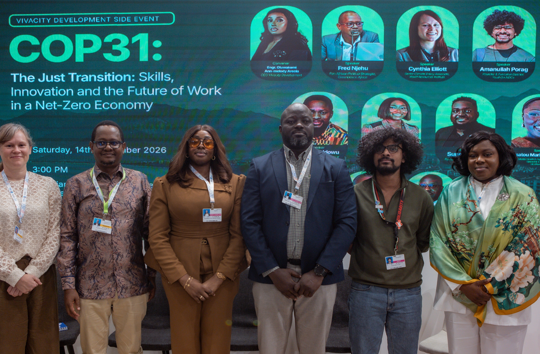
Vivacity Development and Greenpeace Africa have called for increased investment in green skills, fair climate financing and protection for workers and vulnerable communities as countries navigate the global transition to a net-zero economy.
The organisations made the call at a high-level side event held at the Nigerian Pavilion in the Blue Zone of the Antalya Expo Centre, Türkiye, during the 31st United Nations Climate Change Conference (COP31).
The event, held on November 14, 2026, was themed, “The Just Transition: Skills, Innovation and the Future of Work in a Net-Zero Economy”.
It brought together policymakers, climate technology innovators, development experts and civil society leaders to examine how developing economies could equip their workforce for emerging opportunities while protecting workers in traditional and carbon-intensive industries.
Speaking on Nigeria’s Path to a Just Transition: Policy, Workers and Green Jobs in a Net-Zero Economy, the Special Assistant to the President on Climate Change Matters, Comrade Yussuf Olatunji Kelani, highlighted the need for policies that would ensure the country’s energy transition protects workers and creates employment opportunities.
The first panel session, which focused on green industrialisation, technology and the future of work, was moderated by Sharon Chiahemen, Chief Operations Officer of Let’s Talk Humanity Initiative.
Founder of Sunny Side Eco Hub, Sunny Idoko, examined how digital tools and artificial intelligence could expand green solutions and create decent employment opportunities for young people rather than displace workers through automation.
He also highlighted the digital and green skills young people need to acquire to position themselves for emerging jobs in a net-zero economy.
Senior Sustainability Officer at Jospong Green Transition, Jospong Group, Ghana, Dr Gloria Boamah, discussed the potential of waste management and sanitation to generate green jobs in African cities.
She also examined how carbon markets could attract investments while benefiting host communities, alongside practical measures to reduce methane emissions from waste and improve access to circular economy jobs for women and young people.
Co-founder of ICCDI Africa, Olumide Idowu, highlighted the limited flow of climate finance to local communities and the need to deploy such funding towards skills development and employment generation.
He also emphasised the role of young people and community organisations in driving climate action through locally led projects capable of delivering lasting benefits beyond their initial funding.
Founder of TALKtherapy.gm, Isatou Mariama Gaye, addressed the importance of mental health in building a workforce resilient to climate change, including the potential of artificial intelligence and human counsellors to expand access to mental health support.
The second featured address, titled “Cities at the Frontline: Environmental Regulation, Green Skills and Decent Work in Lagos”, was delivered by the Managing Director/General Manager of the Lagos State Environmental Protection Agency (LASEPA), Dr Babatunde Ajayi.
Ajayi highlighted the role of environmental regulation in developing green skills and promoting decent employment in Lagos.
The second panel session, which focused on finance, local action and inclusion, was moderated by Ebaide Omiunu, Founder of The Ebaidebheki Initiative.
Pan-African Political Strategist at Greenpeace Africa, Fred Njehu, called for stronger links between climate finance and trade policies to ensure that the benefits of a just transition reach African communities.
He also highlighted the policy measures and partnerships required to translate climate financing into green jobs and decent work across the continent.
The Special Adviser to the Lagos State Governor on Environment, Engr. Olakunle Rotimi-Akodu, discussed the implications of a just transition for climate-vulnerable cities such as Lagos.
He highlighted nature-based solutions to challenges including extreme heat, flooding and rising sea levels, as well as the importance of improved waste management systems in protecting public health, supporting livelihoods and advancing the state’s climate objectives.
Cynthia Elliott of the World Resources Institute (WRI) addressed climate justice for frontline communities, emphasising the need for nature-based solutions that provide sustainable livelihoods and stronger accountability for governments and businesses in meeting their climate commitments.
Founder and Executive Director of Youth for NDCs, Amanullah Porag, called for national climate plans, known as Nationally Determined Contributions (NDCs), to incorporate clear commitments on green jobs and skills development for young people.
Drawing lessons from Bangladesh and the Asia-Pacific region, he also highlighted the importance of meaningful youth participation in climate policymaking and translating commitments into financing and practical community-level interventions.
A fireside chat titled “From Boardrooms to Communities: Building Relationships for Climate Justice and Meaningful Climate Action” featured Community Organiser at Asians For Climate Solutions and Facilitator at Climate Writers, Ali Khan, who examined the importance of building trust between decision-makers and communities to advance climate justice.
The event was anchored by Development Consultant, Ojugo Onyelukachukwu, and Omiunu, and concluded with an open-floor discussion that allowed participants to engage directly with the speakers.
Speaking on the objectives of the event, Chief Executive Officer of Vivacity Development, Engr. Oluwakemi Ann-Melody Areola, said the organisation sought to move discussions on just transition beyond environmental commitments to practical measures capable of delivering jobs, innovation and economic inclusion.
She said the organisers also intended to strengthen partnerships among international development institutions, investors, policymakers and private sector players to expand climate solutions and green skills across Africa and other developing economies.



No comments yet. Start the conversation.