
By Victor Ugwu
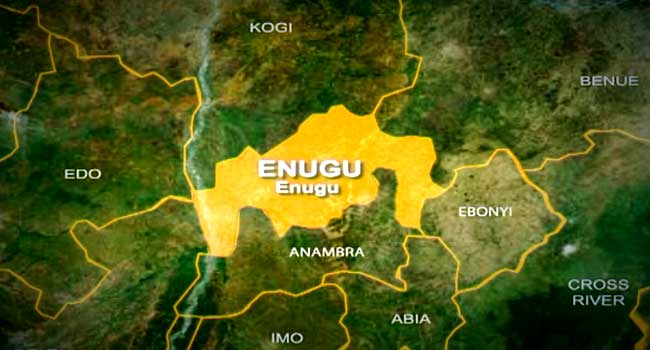
Snuggled in between the serene, undulating hills of Lejja in Nsukka Local Government Area of Enugu State, Nigeria, is the now famous Dunoka Iron Smelting Site at Otobo Ugwu in Lejja. Cylindrical slag found at this historical site, which is currently seeking UNESCO recognition and approval as a World Heritage Site, has been carbon-dated to 4005±40 BP (See Eze-Uzomaka 2013). In other words, inhabitants of Lejja already had the technology and skill to produce and forge iron implements from raw iron ore some two thousand years (2,000) before the birth of Jesus Christ. This puts to rest earlier insinuations and accounts that Africa’s involvement in iron technology came much later and may most likely have been a transferred technology from elsewhere. Having visited several historical sites in Nigeria in the recent past, one is simply overwhelmed and utterly amazed by what one finds at the Dunoka Iron Smelting Site in terms of the age of the technology and the skill employed by the iron smelters of this ancient community.
The cylindrical slag blocks clustered at the village square, resembling large granite stones, tell a story that not even a thousand-paged book can adequately tell or convey. On the ground, and looking at these heavy, well-arranged ‘stones’, one is immediately transported back some four thousand years ago, wondering how the inhabitants of this place were able to invent the skill of iron production (See Figure). One could also imagine the dexterity with which those skilled hands, not minding the heat from the crude furnaces and surrounded by heavy slags, still persisted and worked until iron was finally extracted and used to forge implements. Dunoka is not just a historical location but a heritage site as well, which, if eventually recognized and approved by UNESCO, will put Lejja, Nsukka, Enugu State, and Nigeria on the global heritage site map. One of the major drivers of this bold initiative to attract UNESCO’s attention and eventual recognition is the Heart Disease Prevention and Training Centre (HDPTC), a global healthcare provider and heritage promotion non-governmental organization, with a Board of 1 Trustees and a CEO (Dr. Felix Asadu Esq.).
They are, however, not working alone to realize this dream. They are in collaboration with the Department of Archaeology and Heritage Studies, University of Nigeria, Nsukka, as well as the host community and custodians of the heritage site, Dunoka, one of the thirty-three villages in Lejja. There are, however, other partner government and non-governmental organizations, including the National Commission for Museums and Monuments (NCMM) and the Centre for Memories, Enugu (CFM), that are also working towards the realization of this project. A Memorandum of Understanding (MoU) has been signed by the three main collaborating partners, and real physical work has already started as part of efforts to physically secure the site and the artifacts therein. A committee driving this project has also been constituted, known as the Committee on Lejja Iron Smelting Heritage Site (CLISHS). Membership is drawn from the tripartite arrangement, plus an array of professionals selected from a wide range of fields and professions.
The committee is charged with planning and designing implementable ideas and programmes, as well as putting in place soft and physical infrastructures likely to elicit support from non-domiciled and wider stakeholders for the eventual recognition of the Dunoka Iron Smelting Site as a UNESCO heritage site. Some of the physical structures have already been installed at the site by the committee, and these include a demarcating iron mesh to protect the site from vandalization and unauthorized entry. Other activities of the committee include the academic archiving and documentation of all objects and artifacts found at the site, through pictures, video, and audio recordings. This aspect is primarily being handled by the Department of Archaeology and Heritage Studies, University of Nigeria, Nsukka, under the headship of Dr. Chioma Vivian Ngonadi. A website, https://lisson.org, is already in place to assist students, scholars, researchers, tourists, and members of the public who need more detailed information and guidance on the historic site.
A storey building has been donated by the Dr. Camellus and Mrs. Sirlyne Ezeugwu Foundation Trust to serve as an office, as well as an institute for the Dunoka Iron Smelting project. The building, located at Umunengwa-Echara in nearby Nsukka town, will not only serve as a Heritage Institute but also as a Community Health Centre. Specifically, the place is dedicated to the Lejja Iron Smelting 2 knowledge collation and learning depot for the public and will collaterally serve as a healthcare and wellness centre for surrounding communities. However, the story of the Dunoka Iron Smelting Site will not be complete without the mention of the names of different people, including Professor Fredrick Anozie, who first started archaeological research in Lejja in the late 70s, and Dr. Pamela Eze-Uzoamaka, who, alongside the African Archaeology Network’s director, Professor Felix Chami of the University of Dar es Salaam, Tanzania, carried out a detailed archaeological excavation in 2007, which produced a radiocarbon date of 4005±40 B.P., among other dates.
Additionally, this collaborative project funded the first set of students from the Department of Archaeology, University of Nigeria, to the University of Dar es Salaam, Tanzania, for their Master’s programme. There are others too whose contributions brought to the limelight the need for the recognition and preservation of Otobo Ugwu-Dunoka as a heritage site. They include Professor Damian Opata and Professor Christian Opata (Lejja indigenes), Dr. Chioma Vivan Ngonadi, and Dr. John Uche Ngonadi of the Department of Archaeology and Heritage Studies, University of Nigeria, Nsukka. And not forgetting also Dr. Ijeoma Onyejekwe of the National Commission for Museums and Monuments, Enugu. Recognition must also go to Dr. Camellus Ezeugwu, an associate professor and the founder of HDPTC Global. This internationally acclaimed cardiovascular surgeon, based in the United States of America, has remained the brain behind the current push to get UNESCO’s recognition of the site. Though some efforts have been made in this regard in the past, none has actually committed infrastructural development on the ground at the site, nor given the Dunoka-Lejja community a true sense of belonging and ownership as custodians of this very important heritage site. This and more is what HDPTC has been able to achieve in so short a time.
Meanwhile, the recent intervention by the United States of America through the award of the Ambassador’s Fund for Cultural Preservation, amounting to twenty-five thousand dollars, is indeed a welcome development. However, that cash award, presented to the director of the Centre for Memories, Mr. Iheanyi Igboko, through the United States’ Consular General in Lagos, will barely scratch the funding needs of the Dunoka Project. Therefore, steady and concerted efforts aimed at attracting more funds from individuals, corporate bodies, as well as governmental 3 and non-governmental organizations, are needed in order to continue ongoing research and infrastructure development at the site. Specifically, the federal, as well as the Enugu State, government are also expected to provide the necessary financial support so as to plug the gaping funding gap needed to get the site ready for UNESCO approval, and also for future research and scholarly work. But most importantly, the Lejja Iron Smelting Site at Dunoka is no longer just a local project; it has increasingly attracted global interest as one of humanity’s earliest civilization centres. Therefore, infrastructure development of the place must meet global standards in order to attract and retain visitors from around the world. This will no doubt cost a lot of money; hence, the need for more financial support from every side.



No comments yet. Start the conversation.