
By Kubura Garba
Political rallies are often remembered for their colourful displays, enthusiastic crowds and declarations of loyalty. Yet, beyond the spectacle, they raise important questions about leadership, governance and the relationship between government policies and citizens’ everyday experiences.
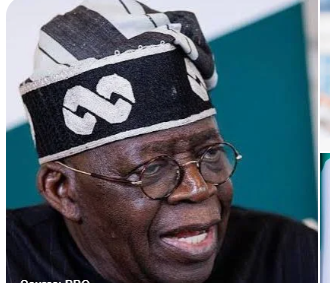
President Bola Ahmed Tinubu’s campaign visit to Dutse, Jigawa State, was an opportunity to examine these issues as Nigeria’s 2027 general elections near. At the Dutse Township Stadium were supporters, party officials and political organisations, including the Tinubu Movement for Sustainable Governance Foundation (TMS), popularly known as Tinubu Must Stay.
For the organisers, the turnout symbolised political solidarity as the occasion provided a platform to discuss economic reforms, agricultural development, infrastructure, security and the expectations of Northern Nigerians. TMS Director of Special Duties, Dr. Usman Baita Elleman, described the gathering as evidence of growing grassroots acceptance of Tinubu’s leadership.
“The rally was very beautiful. People came out in their numbers to show solidarity with the President and the Governor. From what we saw today, there is no doubt that President Tinubu enjoys enormous support in Jigawa State and across Northern Nigeria,” he declared.
TMS, whose national leadership is headed by Kashifu Inuwa Abdullahi, Director-General of the National Information Technology Development Agency (NITDA) and an indigene of Jigawa State, participated prominently in the mobilisation through banners, billboards and other campaign materials.
Besides the publicity, what deserves attention is the movement’s approach to explaining government policies and responding to public concerns. Elleman acknowledged that some of the administration’s economic decisions, particularly the removal of the petrol subsidy, had imposed hardship on Nigerians.
The director nevertheless maintained that the reforms were necessary to address structural weaknesses and strengthen public finances. “We are telling Nigerians the facts about these policies. Some of the decisions may be painful, but they are aimed at putting the country on a sustainable path,” he explained.
This argument reflects one of the central debates surrounding the Tinubu administration. For decades, successive governments struggled with the financial burden of petrol subsidies. Advocates of removal argued that the arrangement encouraged inefficiency, distorted market incentives and diverted resources from development priorities.
Critics, however, warned that removing subsidies without adequate safeguards would increase transportation costs, raise food prices and intensify hardship among vulnerable households. The experience since the policy’s introduction underscores the importance of balancing fiscal sustainability with social protection.
For a farmer in Hadejia, a trader in Kano or a commercial motorcyclist in Dutse, economic reform is not merely about budgetary projections. It is felt through the cost of fuel, food, transportation and other necessities. This is why government communication must explain the rationale for reforms and the benefits citizens should expect.
At the rally, President Tinubu defended subsidy removal and rejected suggestions that the previous arrangement could be restored. “To those who say subsidy is coming back, it’s a lie. Don’t let them lie to you again. It is not going to come back,” he told supporters.
Tinubu argued that resources previously committed to subsidy payments should support infrastructure, agriculture, education and social development. “We have to think about the future of our children. The money must be invested in areas that will create prosperity and opportunities for all Nigerians,” he said.
The underlying argument is understandable, but its credibility depends on transparent expenditure and tangible outcomes. Nigerians deserve to know how resources are allocated, which projects are funded and whether the benefits justify the sacrifices associated with reform.
Agriculture offers a particularly important test of these commitments in Northern Nigeria. The region possesses enormous agricultural potential, yet farmers continue to confront inadequate financing, mechanisation, irrigation, storage facilities, transportation and insecurity.
President Tinubu announced plans to expand agricultural support through interest-free loans and mechanised farming service centres across the six geopolitical zones. “We have to invest in agriculture. There will be interest-free loans for farmers. Prosperity is coming. Food security will happen.”
These commitments address genuine challenges, but their success will depend on implementation. Farmers need accessible financing, affordable equipment, functional extension services and reliable markets. Mechanisation centres must serve smallholder farmers rather than become facilities celebrated during commissioning ceremonies but neglected afterwards.
Similarly, interest-free loans require transparent beneficiary selection, timely disbursement and effective monitoring. The President pointed to investments in electricity, skills acquisition, youth empowerment, job creation and support for small and medium-sized enterprises.
His reference to the Nigerian Education Loan Fund (NELFUND) was relevant to young Nigerians facing financial barriers to tertiary education. Student loans can expand educational opportunities, but their effectiveness depends on accessibility, timely payments and efficient administration.
However, education financing must also be complemented by employment opportunities and stronger links between academic training and labour-market demands. A student loan may help a young person enter university, but sustainable economic opportunities remain essential after graduation.
Security remains equally important. President Tinubu said his administration was strengthening the operational capacity and welfare of security agencies to improve their response to criminality. Such pledge is reassuring as people want to cultivate their land freely, travel safely and conduct daily activities without fear.
Speaking, Vice-President Kashim Shettima highlighted infrastructure projects in Northern Nigeria. He cited the Kano–Maiduguri Road, Kano–Maradi railway and Kwanar Danja–Hadejia Road as examples of the administration’s development commitments. These projects will enhance regional trade, agricultural productivity, transportation and economic integration.
But infrastructure performance should be assessed through verifiable construction progress, completion timelines, expenditure transparency and benefits delivered to communities. Project announcements and contract awards should not be confused with completed infrastructure.
Against this background, the role of TMS deserves consideration. The movement, Elleman noted, is intensifying grassroots mobilisation through policy sensitisation, community engagement, and empowerment programmes for small-scale entrepreneurs, especially where citizens lack access to clear information about government programmes.
However, credible political communication must also acknowledge implementation gaps, respond to legitimate criticism and distinguish between achievements and promises. Citizens should be treated as participants in governance rather than merely as audiences for political messaging.
If a programme is delayed, the reasons should be explained. Where interventions succeed, supporting evidence should be available. Where hardship persists, public concerns deserve serious attention. The same standards should apply to opposition parties, whose responsibility includes scrutinising government performance and presenting practical alternatives.
As the 2027 elections approach, political competition will naturally intensify. Parties and advocacy groups will organise rallies, promote candidates and defend competing policy positions. Competition is essential to democracy, but it becomes more purposeful when grounded in facts, institutional accountability and respect for differing opinions.
The Dutse rally illustrated the energy of political mobilisation and spotlighted issues that will continue to shape public debate: economic reform, food security, infrastructure, education, employment and national security. Yet its significance cannot be determined solely by the size of the gathering or the enthusiasm of supporters.
Therefore, the Tinubu administration must ensure that its economic policies improve the lives and welfare of Nigerians. For TMS and other advocacy organisations, the responsibility is to communicate policies accurately while listening to citizens, while the opposition must provide credible scrutiny and workable alternatives.
Kubura Garba writes from Kofar Famfo, Kano.




No comments yet. Start the conversation.