
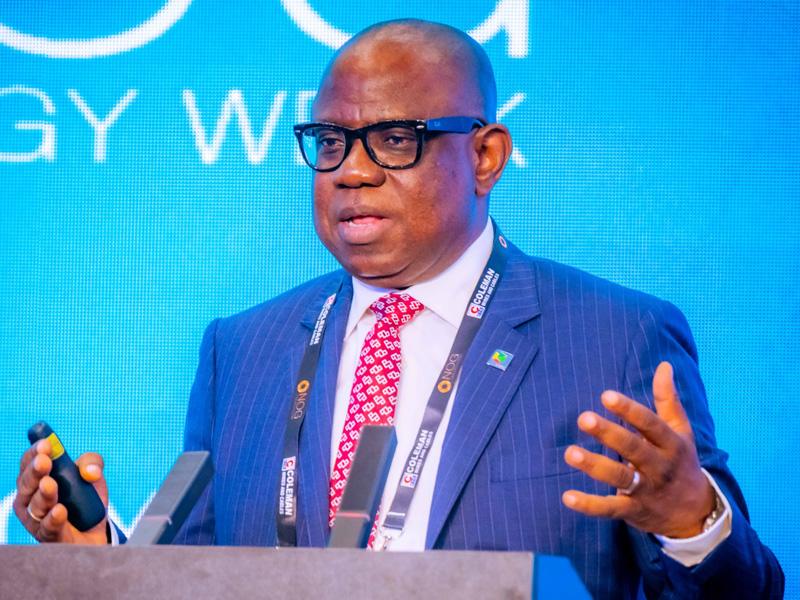
The Energy Reforms Monitoring Initiative Africa has commended the Group Chief Executive Officer of the Nigerian National Petroleum Company Limited, Bashir Ojulari, for his leadership in driving the completion of the Ajaokuta-Kaduna-Kano (AKK) Gas Pipeline.
The group said the project, reportedly 95 per cent complete, would improve energy access, support businesses and stimulate economic activities across Northern Nigeria.
In a statement on Saturday, its Executive Director, Dr Patrick Kwame, said the progress recorded on the 614-kilometre pipeline reflected the commitment required to deliver critical national infrastructure.
He noted that plans to begin gas supply to Abuja before the end of 2026, followed by Kaduna and Kano in 2027, showed a focus on delivering tangible results.
“Major infrastructure projects are ultimately judged by their impact on people’s lives, not simply by the amount of money invested or the length of pipelines constructed.
“The AKK project has the potential to change how businesses operate, how electricity is generated and how households access energy. We commend Mr Bayo Ojulari for maintaining the focus required to bring this important national investment closer to completion,” the statement said.
The initiative said reliable gas supply would help power plants operate more efficiently, support manufacturing, attract investment and create employment opportunities.
It added that improved access to gas could also encourage the expansion of compressed natural gas (CNG), providing transport operators and other users with alternatives to petrol and diesel.
“For ordinary Nigerians, the value of the AKK pipeline will be measured in more reliable electricity, lower operating pressures on businesses, new employment opportunities and a wider range of energy choices,” Kwame said.
The group also said the pipeline could strengthen energy security in the North by reducing the dependence of industrial and power facilities on gas transported over longer distances from southern Nigeria.
The 40-inch pipeline is designed to transport natural gas from Ajaokuta in Kogi State through Abuja and Kaduna to Kano, linking major economic and industrial centres along its route.
The initiative also highlighted NNPC’s reported $1.5bn financing raised against projected pipeline throughput, describing it as evidence of the potential of commercially viable infrastructure to attract investment.
However, it stressed that completing the main transmission line must be followed by the construction of distribution connections and facilities needed to supply end-users.
“The remaining work must receive the same level of attention and urgency that has brought the project to its present stage. A completed transmission pipeline must translate into actual gas supply for power plants, factories and other users,” Kwame said.
The group urged NNPC and other stakeholders to sustain the momentum, ensure transparency and accountability, and make the infrastructure fully operational so Nigerians can benefit from the investment.



No comments yet. Start the conversation.