
…Unveils immersive exhibitions highlighting resilience, cultural identity, creative innovation
By Joseph Erunke
The European Union (EU) has brought the devastation of Russia’s war against Ukraine and the transformative power of digital creativity to the centre of the Lagos Biennial 2026, unveiling two immersive exhibitions designed to deepen cultural exchange between Europe and Africa.
The exhibitions, showcased at the EU’s pavilion, tagged Together, offer visitors an opportunity to experience the human cost of war, the resilience of displaced communities and the growing possibilities of technology in contemporary artistic expression.
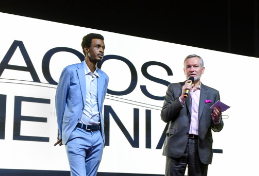
The EU Ambassador to Nigeria and ECOWAS, Gautier Mignot, disclosed this on Saturday, November 14, at the opening of the pavilion, describing the initiative as a major step in the bloc’s efforts to strengthen cultural relations with Nigeria and the wider African continent.
Mignot said the EU’s participation followed years of deliberate planning and reflected a shift from merely sponsoring cultural events to actively participating in major international exhibitions across the world.
He cited the EU’s involvement in the Guadalajara International Book Fair in Mexico and Expo 2025 in Osaka, Japan, as examples of its growing commitment to using culture as a platform for international engagement.
According to him, Nigeria became a natural destination when the EU considered expanding its cultural presence in Africa, given Lagos’s growing reputation as a global centre of artistic expression and creative innovation.
He described the Lagos Biennial as an important international platform for bringing together artists, cultural institutions and audiences from different backgrounds.
The ambassador recalled that the partnership began taking shape after he met the Biennial’s founder and director, Folakunle Oshun, in Paris about two years ago, shortly after assuming his diplomatic responsibilities in Nigeria.
He said the outcome of the engagement had surpassed expectations, commending the organisers for building the exhibition into a major international cultural gathering.
“It was a bit of an act of faith, in truth, but really the result is beyond expectations,” he said.
At the heart of the EU pavilion are two digital exhibitions, Home Beyond the Dawn and The Future is Shared, which explore the intersection of conflict, identity, resilience and technological innovation.
The first, Home Beyond the Dawn, brings the devastating human consequences of Russia’s full-scale invasion of Ukraine into sharp focus, using immersive digital art to tell the stories of Ukrainian artists and civilians whose homes, families and communities have been torn apart by nearly five years of war.
Beyond the destruction of homes and forced displacement, the exhibition examines the suffering of civilians under Russian occupation, including human rights violations and alleged war crimes.
It also explores how armed conflict threatens cultural identity, separates families and deprives people of the sense of belonging associated with home.
However, amid the grim realities of war, the exhibition presents art as a powerful instrument of resilience, preserving collective memory, defending identity and providing a voice for people whose experiences might otherwise remain unseen.
Mignot said the exhibition was designed to demonstrate how art and the idea of home could become powerful symbols of identity and resistance in the face of Russia’s aggression against Ukraine.
The second exhibition, The Future is Shared, by Italian digital artist Stefano Fake, shifts attention to the possibilities of technology in reshaping contemporary art.
The installation combines images, light, sound and digital environments to create an interactive experience in which visitors are not merely spectators but active participants in the artistic process.
It explores how digital innovation can break traditional barriers in art, making creative expression more accessible while connecting people across cultures, communities and generations.
Fake is also engaging students, designers and artists in a collaborative creative process, with their contributions expected to become part of an evolving immersive digital installation at the Biennial.
The two exhibitions form part of the EU’s contribution to the fifth edition of the Lagos Biennial, themed The Museum of Things Unseen, which seeks to bring overlooked experiences and perspectives into public consciousness while exploring new frontiers of artistic expression.
Beyond the exhibitions, Mignot highlighted the Africa-Europe Partnerships for Culture programme, through which the EU provides support for collaborations between African and European artists and cultural institutions.
He disclosed that funding opportunities were available through various calls for proposals, including initiatives targeting cultural institutions and museums.
He urged Nigerian artists, creative professionals and cultural organisations to take advantage of the opportunities to develop international partnerships and expand their reach.
In his remarks, Oshun expressed appreciation to the EU for its support, describing the partnership as a significant contribution to the growth and international visibility of the Lagos Biennial.
He said the exhibition’s development over the past nine years had been driven by the resilience, determination and creativity of artists and cultural professionals committed to building a sustainable platform for contemporary art.
Oshun particularly thanked Mignot and his team for bringing their artists and creative contributions to Lagos.
“Thank you for the support, thank you for the encouragement, thank you for the kind words, thank you for bringing your amazing artists and your amazing team to Lagos. It means a lot to us,” he said.
He also acknowledged the participating artists, sponsors, supporters and individuals whose contributions had sustained the Biennial over the years.
Through its Together pavilion, the EU is using the Lagos Biennial not only to showcase artistic innovation but also to draw attention to the human consequences of war, celebrate cultural resilience and strengthen creative partnerships linking Europe, Africa and Ukraine.


No comments yet. Start the conversation.