
By Ogochukwu Agha
Stakeholders in the technology and human rights sectors have called for stronger digital rights protection, inclusive technology policies and collective action against technology-facilitated gender-based violence in Nigeria and other West African countries.
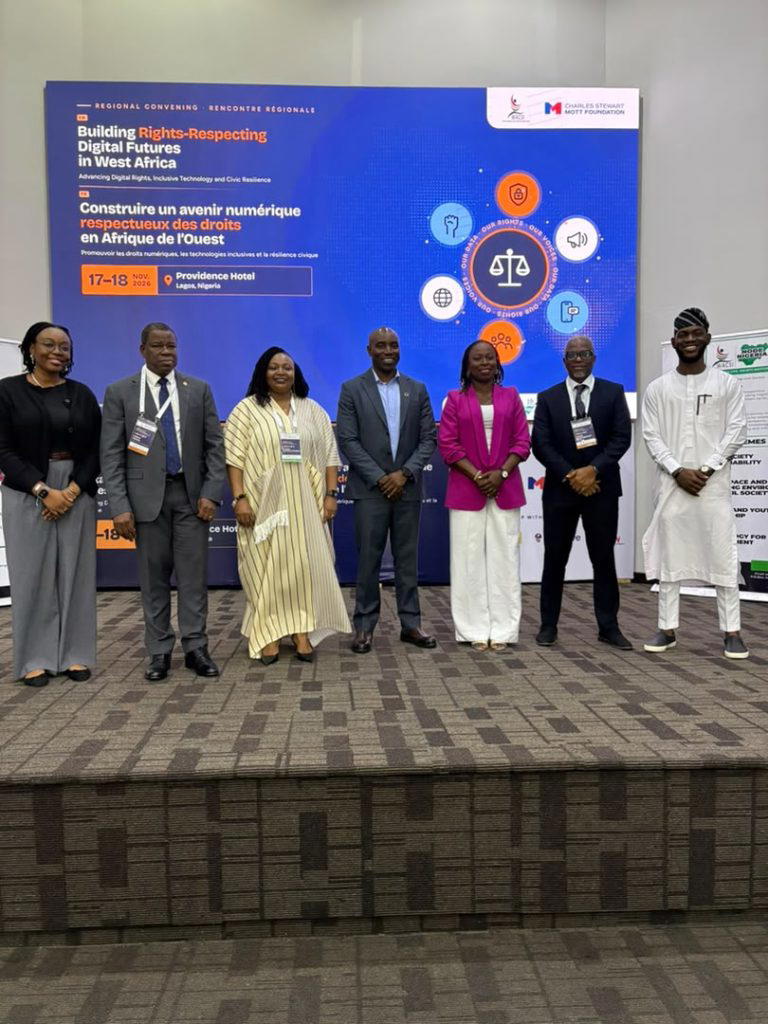
The call was made at a High-Level Regional Convening on Digital Rights, Accountable Technology and Civic Resilience in West Africa, held in Lagos, which brought together civil society organisations, technology companies, policymakers, ECOWAS officials, regulators and journalists.
Participants highlighted growing concerns over online harassment, surveillance, internet disruptions, disinformation, restrictive laws and the digital divide, stressing the need to place human rights at the centre of technological development.
The Executive Director of the West Africa Civil Society Institute (WACSI), Dr Nana Asantewa Afadzinu, said digital technology had become an essential part of everyday life and social interaction, making the protection of users increasingly important.
She questioned whether existing digital infrastructure and governance systems were adequate to guarantee people’s safety, security and access to technology.
The Chief Executive Officer of the TY Danjuma Foundation, Gima H. Forje, said Nigeria and other West African countries were experiencing rapid digital transformation, with mobile connectivity, digital financial services and emerging technologies creating new opportunities for development.
However, he warned that the same technologies were exposing citizens, journalists, human rights defenders and civil society organisations to risks, including surveillance, internet disruptions, disinformation and restrictions on online expression.
Forje said civic resilience could not be separated from the need for digital governance that respects human rights.
He explained that the TY Danjuma Foundation’s interventions in education, healthcare and civil society development were connected to the broader digital rights agenda.
According to him, the foundation has awarded more than $41.5 million in grants since 2009, supporting over 340 projects across Nigeria’s 36 states and the Federal Capital Territory, with more than 10 million people reached.
He identified education as a critical component of digital inclusion, arguing that digital literacy and critical thinking were necessary for meaningful participation in the digital space.
Forje said the foundation had partnered with organisations, including Teach for Nigeria and Teacher Aid Initiative, to train hundreds of teachers across the country.
He also cited interventions in Akwa Ibom State, where more than 12,000 pupils had benefited from programmes aimed at improving their performance in mathematics and science, with some schools introducing basic coding.
On healthcare, he said the foundation had invested in electronic medical records systems to improve efficiency, accountability and continuity of care in health facilities.
However, he stressed that the increasing use of technology in healthcare also raised concerns about data protection, privacy and responsible information management.
Forje further emphasised the importance of strengthening civil society organisations to defend human rights, generate evidence and hold public institutions accountable.
He said digital transformation should not deepen existing inequalities, particularly among women, young people, rural communities and vulnerable populations.
The Head of Policy, Influencing and Advocacy at WACSI and head of WACSI-NODE Nigeria, Omolara Balogun, also raised concerns about unequal access to digital platforms, noting that financial constraints and inadequate digital skills continued to exclude many people from online participation.
Balogun particularly highlighted technology-facilitated gender-based violence, arguing that responsibility for online safety should not be left to individual users, especially women who experience harassment and intimidation.
“We cannot put the burden on citizens themselves to say, if you feel threatened on the internet, just remove yourself. It has to be shared responsibility,” she said.
With Nigeria approaching another election cycle, she stressed the importance of protecting citizens’ ability to participate in online discussions and hold political leaders accountable without intimidation or harassment.
She also called for harmonisation of digital rights laws across West African countries to strengthen cross-border accountability for violations.
Data scientist and Founder of Chad VE, Israel Olatunji Tijani, warned that election periods could heighten risks in the digital environment, particularly through the spread of misleading information and AI-generated content.
He urged citizens and civil society organisations to familiarise themselves with the Cybercrime Act and adopt secure communication platforms, such as Signal, when handling sensitive information.
Tijani also expressed concern over the growing volume of artificial intelligence-generated content and deepfakes, saying many civil society organisations lacked the personnel, technology and technical capacity to effectively monitor and counter the trend.
Representing the Managing Partner of Co-Creation Hub (CcHub), Dr Oluwaseun Adepoju, the organisation’s Senior Programme Manager for Governance and Civic Resilience, Yvonne Eweka, said digital transformation must be guided by human rights, accountability and inclusive governance.
She identified inclusive access, protection of civic space, citizens’ participation, transparency and African data governance as essential elements of a digital future that serves the interests of the continent.
Participants at the convening agreed that governments, technology companies, regional institutions and civil society organisations must share responsibility for ensuring digital safety, access and accountability.
The TY Danjuma Foundation reaffirmed its commitment to supporting multi-stakeholder initiatives aimed at advancing digital rights and strengthening civic resilience in Nigeria and across West Africa.



No comments yet. Start the conversation.