

For decades, Nigeria’s maritime trade has operated through a single, overstretched funnel in Lagos—leaving importers, manufacturers, and commodity exporters paying the price in port congestion and steep inland haulage costs.
Now, Cross River State is pitching an ambitious alternative to institutional capital. Backed by the African Export-Import Bank (Afreximbank) as mandated lead arranger and $2.27 billion in initial funding approvals, the $3.5 billion Bakassi Deep Seaport project is deliberately sidestepping sovereign debt in favour of a structured public-private partnership (PPP)—combining a 20-metre deep-water draft, a 260-kilometre superhighway, and commercial agro-industrial zones to turn eastern Nigeria into a bankable global trade corridor.
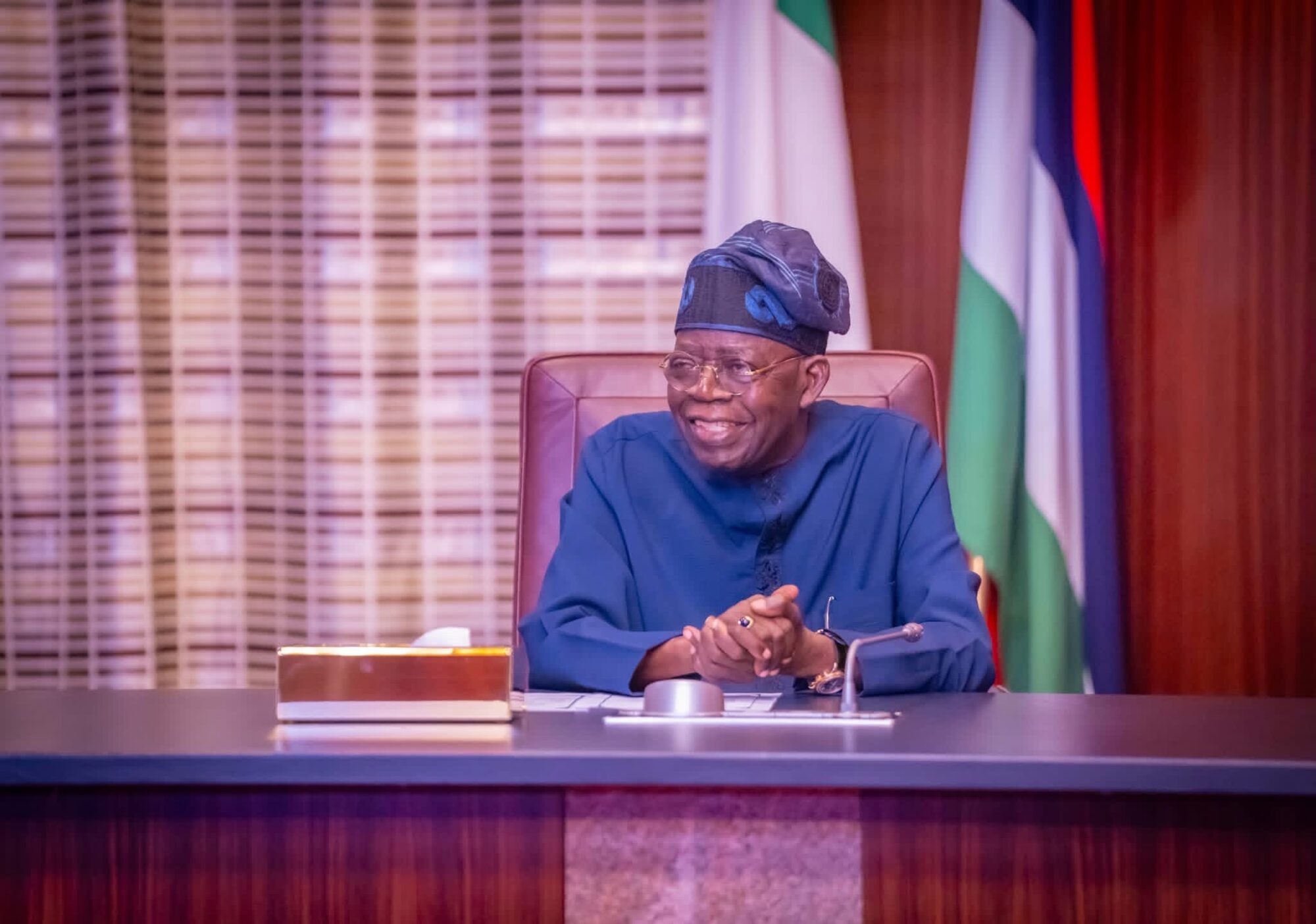
Having moved toward implementation with a groundbreaking ceremony attended by President Bola Tinubu, the project is being positioned as a major intervention in Nigeria’s maritime infrastructure—one designed to redistribute trade capacity, alleviate single-hub concentration, and unlock private capital across multiple value chains.
For institutional investors and project financiers, however, the thesis hinges on execution discipline beyond groundbreaking ceremonies. Delivering bankable returns will require uninterrupted capital mobilisation, reliable power and utility infrastructure, efficient customs administration, rigorous environmental impact mitigation to protect marine ecosystems and fishing livelihoods, and sustained industrial and agricultural output to keep cargo volumes flowing through the corridor.
One of the strongest commercial arguments for Bakassi Deep Seaport project is its potential to break Nigeria’s heavy dependence on Lagos for maritime cargo operations. Businesses located in the South-South, South-East, and northern regions currently absorb steep inland haulage costs moving freight from Lagos to factories, warehouses, and consumer markets.
A deep-water gateway in Cross River State provides an alternative entry and exit point—not as an automatic replacement for Lagos, but as complementary capacity that introduces inter-port competition, improves service efficiency, and strengthens supply-chain resilience as population and industrial volumes grow.
Central to the commercial proposition is a 20-metre draft, engineered to receive larger ocean-going vessels requiring greater water depth. Because larger ships carry higher cargo volumes per voyage, deep-draft capacity can lower unit shipping costs and attract international shipping lines that might otherwise divert cargo to competing West African ports with deeper berths and faster turnaround.
Beyond direct terminal and berth revenues, regular calls by larger vessels stimulate an entire ecosystem of ancillary maritime services—including pilotage, towage, bunkering, vessel repairs, marine insurance, freight forwarding, warehousing, and specialised container, bulk, and liquid cargo handling. Realising that upside, however, requires sustained channel dredging, modern navigation systems, competitive tariffs, and dependable cargo throughput.
“We inherited this dream, and with public funds already committed, it was our responsibility to carry it forward. Today is another major step toward realising the Bakassi Deep Seaport,” said Cross River State Governor Bassey Otu.
Governor Otu has sought to advance the inherited project from concept to execution without mortgaging the state’s balance sheet through conventional sovereign borrowing. Instead, the administration is pursuing an investor-driven public-private partnership (PPP) model backed by institutional and multilateral arrangements.
Engagements with the Infrastructure Concession Regulatory Commission (ICRC), Nigerian Ports Authority (NPA), and Nigerian Shippers’ Council have anchored regulatory preparation. At the federal level, the project aligns with the Tinubu administration’s marine and blue economy agenda—marked by the 2023 creation of the Federal Ministry of Marine and Blue Economy and Nigeria’s first National Policy on Marine and Blue Economy.
On July 1, 2025 in Calabar, the state presented hydrographic, geophysical, and geotechnical survey findings to guide engineering design, dredging requirements, and environmental management while retiring colonial-era navigational charts dating back to 1903.
A seaport’s commercial viability depends as much on hinterland evacuation as on quay-side operations. To prevent port-gate congestion, the Bakassi blueprint pairs maritime infrastructure with a 260-kilometre superhighway (alongside the state’s broader 217-kilometre superhighway plans and connectivity to the Lagos-Calabar Coastal Highway and state airport). Linking maritime, air, and road transport gives Cross River a multimodal logistics profile capable of supporting bonded warehouses, inland container depots, truck terminals, and industrial parks.
Proximity to deep-water shipping lowers input costs for industries in packaging, food processing, chemicals, fabrication, and building materials. Simultaneously, cold-storage and modern seafood-processing facilities can cut post-harvest losses for coastal fisheries and open higher-value export markets, alongside shipbuilding, marine engineering, aquaculture, and coastal tourism.
Governor Otu’s agricultural agenda aims to shift farming across all 18 local government areas from subsistence to mechanized commercial output—creating organic export cargo for the port. Initiatives include state-wide digital soil mapping, a seven-year strategic plan for cocoa and oil palm, value-chain programmes for cassava, coffee, rice, and yam, subsidized distribution of over 100 mini-tractors and inputs, rural road and irrigation upgrades, the Project Grow credit guarantee scheme, and the IFAD-assisted LIFE-ND agribusiness programme.
Cross River’s formal repossession of the Tinapa resort from the Asset Management Corporation of Nigeria (AMCON)—which had held the asset since 2011—eliminates longstanding ownership ambiguity.
State officials and Finance Commissioner Mike Odere have framed the handover as a springboard to attract credible private investors to reposition Tinapa as a complementary hub for trade, tourism, and creative enterprise.
Construction and port operations are expected to generate thousands of direct and indirect jobs across engineering, logistics, customs, marine pilotage, hospitality, and professional services, supported by vocational training in marine engineering, hydrography, and port management. For Cross River—whose revenue base narrowed following the loss of the Bakassi Peninsula and oil-well revenue adjustments—a productive maritime-industrial hub offers a path to stronger internally generated revenue and urban expansion.
Speaking at the groundbreaking, Minister of Marine and Blue Economy Adegboyega Oyetola highlighted broader sector momentum, noting that revenues generated by ministry agencies rose from N700.79 billion in 2023 to N1.83 trillion in 2025 following revenue-assurance reforms, alongside legacy port modernisation, improved maritime security, and Nigeria’s return to the International Maritime Organisation Council.
- US overtakes Uganda as Kenya’s top export market as China imports hit KSh113bn
- Unilever Nigeria moves to transfer its food business to McCormick
- Oyo School Alumni call for coordinated intervention to boost rural community schools

Iheanyi Nwachukwu, is a creative content writer with over two decades journalism experience writing on banking, finance, capital markets, and tax. The multiple awards winning journalist is Deputy Editor, BusinessDay. Iheanyi holds BSc Degree in Economics from Imo State University; Master of Science (MSc) Degree in Management from University of Lagos.
Iheanyi has attended several work-related trainings including (i) Advanced Writing and Reporting Skills (Pan African University, Lagos); (ii) News Agency Journalism (Indian Institute of Mass Communication {IIMC}, New Delhi, India); and (iii) Capital Markets Development and Regulations (International Law Institute {ILI} of Georgetown University, Washington DC, USA).
Other trainings Iheanyi attended include: Economic/Political Risk Analysis (By Thomson Reuters Foundation); International Financial Journalism (IFJ) (By PMA Media Training, UK); Effective Business Writing Skills (By Phillips Consulting); Reporting on Corporate Governance (By International Finance Corporation (IFC) & Thomson Reuters Foundation UK); etc. In addition, he has participated in high-level economy & markets events in Dubai, South Africa, Morocco, and other African countries like Zambia, Ghana and Gambia.




No comments yet. Start the conversation.