
The Federal Mortgage Bank of Nigeria (FMBN) occupies a strategic place in Nigeria’s housing finance system. As the institution responsible for administering the National Housing Fund (NHF) Scheme, FMBN’s performance is measured not only by the resources it mobilises, but also by how effectively those resources are converted into housing opportunities for eligible Nigerians.
Operating in a country with an estimated housing deficit of over 15 million units, the Bank has been playing a critical role in addressing the housing challenge by mobilising long-term funds through the NHF Scheme, providing affordable mortgage financing, supporting housing development and expanding access to homeownership through its range of housing finance products. Through these interventions, FMBN contributes to bridging the housing gap and making homeownership more accessible to Nigerian workers and other eligible contributors.
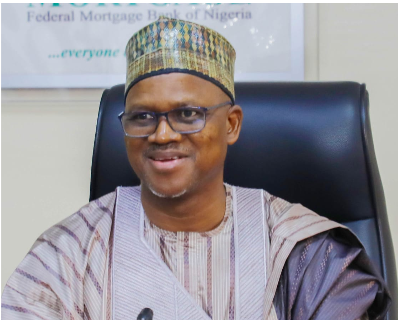
Since assuming office in February 2024, the current Executive Management team, led by the Managing Director/Chief Executive, Shehu Usman Osidi, has pursued efforts to strengthen the Bank’s operational performance, expand access to housing finance and improve its capacity to deliver on its mandate. Under the collective leadership of the team, comprising the Executive Director, Loans and Mortgage Services, Dr. Muhammad Sani Abdu; the Executive Director, Finance and Corporate Services, Mr. Ibidapo Odojukan; and the Executive Director, Business Development and Portfolio Management, Mrs. Chinenye Chinedu Anosike, FMBN has recorded progress across housing delivery, mortgage finance, NHF administration, financial sustainability, digital transformation and product development. These developments provide a practical basis for assessing the Bank’s performance and its evolving contribution to Nigeria’s national housing agenda.
Housing Delivery and Access to Finance
A key measure of the Bank’s performance is its contribution to housing delivery and access to housing finance. In 2025, FMBN financed 6,911 housing units, achieving 96 per cent of its annual target. Project loan disbursements exceeded ₦79 billion during the year, supporting housing development, while regular NHF mortgage disbursements reached ₦8.2 billion to facilitate homeownership among eligible contributors.
Beyond financing housing construction and individual home purchases, the Bank continued to support Nigerians seeking to improve their existing homes or access homeownership through alternative financing arrangements. Under its Rent-to-Own scheme, FMBN disbursed ₦7.1 billion to 367 beneficiaries, while Home Renovation Loans totalling ₦13.8 billion were disbursed to 15,290 beneficiaries.
The results have also moved beyond financing commitments to completed homes. On August 31, 2026, FMBN handed over 129 completed three-bedroom bungalow units at Nasarawa Technology Village, Karu, Nasarawa State, to beneficiaries under the Rent-to-Own Scheme. The handover is part of a broader pattern of progress across FMBN-funded housing projects, with other projects reaching completion and beneficiaries taking possession of their homes, while several others are at various stages of development across the country.

FMBN is also supporting the Federal Government’s Renewed Hope Housing Programme through direct project funding and an off-taker guarantee of ₦100 billion. The Bank provided ₦27 billion for the Ibeju-Lekki Renewed Hope City project, supporting the completion of 252 units, and ₦19.9 billion for Karsana Renewed Hope City, where 864 units are at advanced stages of completion. These interventions demonstrate FMBN’s role as a financing institution within a wider housing delivery effort involving government and other stakeholders.
Another milestone is the recovery of land in Kaba District, Abuja, in July 2026, through the facilitation of the Independent Corrupt Practices and Other Related Offences Commission (ICPC), following a Federal High Court order. The land, earmarked for 962 housing units, provides an opportunity to bring a previously encumbered asset back into productive use for housing development.
Stronger NHF Administration and Financial Sustainability
The National Housing Fund remains central to FMBN’s mandate. The Bank recorded ₦152.4 billion in NHF collections in 2025, the highest annual collection in the Scheme’s history at the time. It registered more than 300,000 new contributors over the two-year period of the Shehu Osidi-led management, broadening participation in a scheme designed to mobilise long-term funds for housing finance.
During his Customer Service Week address on October 5, 2026, Osidi acknowledged the Scheme’s over 5.8 million registered contributors and commended the stakeholders whose contributions sustain it.
FMBN has also continued to meet its obligations to eligible contributors seeking refunds. In 2025, it paid ₦15.6 billion in NHF refunds to 55,068 beneficiaries. In a recent interview, the Managing Director highlighted the automation of NHF refunds, noting that ₦10.6 billion had been disbursed to more than 24,500 retirees nationwide. These are part of the Bank’s effort to rebuild trust through more efficient service.
Financial sustainability is another part of the record. FMBN posted an operational surplus of ₦19.5 billion in 2025, following an operational surplus of ₦11.58 billion in 2024, the first such surplus in more than 30 years. The Bank also recorded growth of over 30 per cent in total operating income and expanded its asset base by more than 27 per cent.
Additionally, loan recovery has contributed to the effort to protect the revolving resources available for housing finance. FMBN recovered ₦27.3 billion in delinquent loans across 2024 and 2025. It also recovered ₦19 billion in wrongful deductions from the Office of the Accountant-General of the Federation, strengthening liquidity. The Bank further cleared a six-year backlog of unapproved audited financial statements covering 2018–2023, with approvals secured for the 2018–2021 accounts and the 2022 accounts submitted to the Central Bank of Nigeria. Together, these steps point to a focus on financial control, accountability and institutional credibility.
Digital Transformation and Operational Efficiency
Operational reform is increasingly important as the Bank serves a large contributor base and administers multiple housing finance products. Under the current Executive Management, FMBN completed and deployed the Core Banking Application, intended to improve transaction processing, transparency, data integrity and service turnaround through digital platforms and USSD channels. The Bank’s cloud-based data backup infrastructure also safeguarded critical customer and operational records during the fire incident at its headquarters in August 2026, demonstrating the practical value of digital resilience.
The Bank’s technology upgrades are increasingly translating into improved customer experience through the FMBN Mobile App, NHF Online Portal and 24-hour Contact Centre. These interventions have contributed to a reduction in loan processing time. Building on this progress, Management is pursuing a 30-day turnaround standard for NHF mortgage loan processing, in line with the Ministerial directive, alongside efforts to simplify documentation requirements to a maximum of eight documents. The measures are aimed at reducing bureaucratic delays, improving efficiency and making access to housing finance easier for eligible contributors.
Another significant milestone is the development of the National Mortgage Registry, which the Managing Director has declared ready for deployment. The registry is expected to strengthen mortgage data management, improve transparency, enhance information sharing and promote greater efficiency in mortgage administration. In the same vein, FMBN recently participated in the Stakeholders’ Workshop to validate the National Housing Data Programme Report as well as the Stakeholders’ Conference on the proposed National Real Estate Regulatory Authority. These engagements underscore the Bank’s commitment to supporting efforts to strengthen the institutional and regulatory framework of the housing sector, improve the availability and reliability of housing data, and provide a stronger evidence base for policy formulation and decision-making.
 Preferred photo for Renewed Hope City, Ibeju-Lekki
Further reinforcing this reform agenda, FMBN concluded its 2026 Management Strategy Retreat on October 30, with far-reaching resolutions focused on improving customer service, decentralising business operations and strengthening operational efficiency. Among the key outcomes was the decision to institutionalise annual Customer Town Hall meetings across the six geopolitical zones, providing a structured platform for direct engagement with NHF contributors and other stakeholders. The retreat also considered measures to decentralise operational processes and bring service delivery closer to customers.
These efforts complement the broader housing sector reform agenda of the Honourable Minister of Housing and Urban Development, Engr. Muttaqha Rabe Darma, PhD, as FMBN works to strengthen its institutional capacity and expand access to affordable homeownership.
New Routes to Housing Access
Expanding access to housing finance requires more than conventional mortgage products; it also calls for innovative financing options and strategic partnerships that respond to the diverse needs of Nigerians. In this regard, FMBN has introduced new product offerings, strengthened institutional collaborations and engaged state governments to widen participation in the National Housing Fund Scheme and create additional pathways to homeownership for eligible Nigerians.
Product development has been directed at widening access to people whose circumstances may not be adequately served by conventional mortgage arrangements. On August 7, 2026, FMBN launched its Diaspora NHF Mortgage Loan in London in collaboration with the Nigerians in Diaspora Commission and other stakeholders, including the Central Bank of Nigeria. The scheme provides a structured institutional route for eligible Nigerians abroad to participate in the NHF and pursue homeownership in Nigeria, subject to programme conditions.
FMBN has further expanded its product offerings with the launch of its Non-Interest Mortgage Product, the commissioning of the FMBN-Ijara-01 Estate in Bichi, Kano State, and the presentation of housing keys to the first beneficiaries. Based on the Ijarah Muntahia Bittamleek principle, the product offers an alternative route to homeownership through ethical, non-interest housing finance. The Bank is also preparing to launch its Rent Assistance Loan, which will pay approved rent directly to landlords, with beneficiaries enjoying a 10-month repayment period. Together, the initiatives reflect FMBN’s commitment to providing flexible housing finance solutions that meet the diverse needs of Nigerians.
FMBN has also deepened partnerships with like-minded organisations in its continuing efforts to expand access to affordable housing for Nigerians of low- and middle-income status. In April 2026, the Bank signed a memorandum of understanding with the Federal Government Staff Housing Loans Board (FGSHLB) to facilitate ₦10 billion in housing loans for federal civil servants, with FMBN providing funding for on-lending to eligible workers.
Partnerships with state governments and other housing-sector actors also remain important to this agenda. The Bank secured the return of Oyo State workers to the NHF Scheme after a 27-year hiatus and finalised a memorandum of agreement towards Kano State’s return. It has also advanced engagement with the Ebonyi State Government on a proposed workers’ housing estate initially covering 800 units, with potential for later phases.
Staff Welfare and the People Behind the Results
FMBN’s institutional performance depends on the employees who register contributors, process applications, manage accounts, engage developers and respond to customers. Recognising this, the current Executive Management has pursued measures aimed at improving staff welfare, strengthening professional development and fostering a performance-driven work culture.
These measures include an enhanced staff package, increased remuneration and incentives intended to recognise performance and reward employees’ contributions to the Bank’s objectives. FMBN also provides regular training opportunities for staff across all levels, equipping employees with the knowledge and practical skills required to support its digital transformation agenda and expanding range of housing finance products.
In addition, Management has introduced a Performance Management System (PMS) designed to strengthen accountability, establish clear performance expectations and reward excellence based on measurable results. By linking individual performance assessments to organisational objectives, the system promotes a culture of productivity, commitment and greater ownership of responsibilities.
 Renewed Hope City Estate, Karsana Abuja. Funded by the FMBN
Management is also pursuing engagement with the National Health Insurance Authority (NHIA) to improve health insurance support for employees. To cushion the impact of rising transportation costs occasioned by higher fuel prices, additional staff bus routes have also been introduced to convey employees to and from work.
Together, these measures underscore the importance of investing in the people behind the Bank’s results. By combining improved remuneration and welfare with professional development and performance-based accountability, FMBN is strengthening the workforce required to sustain its institutional reforms and deliver better services to its customers.
Sustaining the Progress
The progress recorded under the Osidi-led Executive Management reflects a deliberate effort to strengthen FMBN’s institutional capacity, improve service delivery and expand access to housing finance. Through its housing delivery initiatives, digital transformation, product innovation and strategic partnerships, FMBN is reinforcing its role as a key driver of affordable housing finance in Nigeria.
As the Bank builds on these achievements, sustaining the momentum will be essential to consolidating the gains recorded and extending their impact. Continued improvements in operational efficiency, customer experience, financial sustainability and housing delivery will further position FMBN to respond to the aspirations of NHF contributors and prospective homeowners.
Ultimately, the story of FMBN under Shehu Usman Osidi is one of an institution working to redefine performance by linking financial and operational progress to tangible housing outcomes. The task ahead is to build on this foundation, deepen the reforms already underway and ensure that the promise of homeownership becomes an increasingly attainable reality for more Nigerians.



No comments yet. Start the conversation.