
By Efe Onodjae
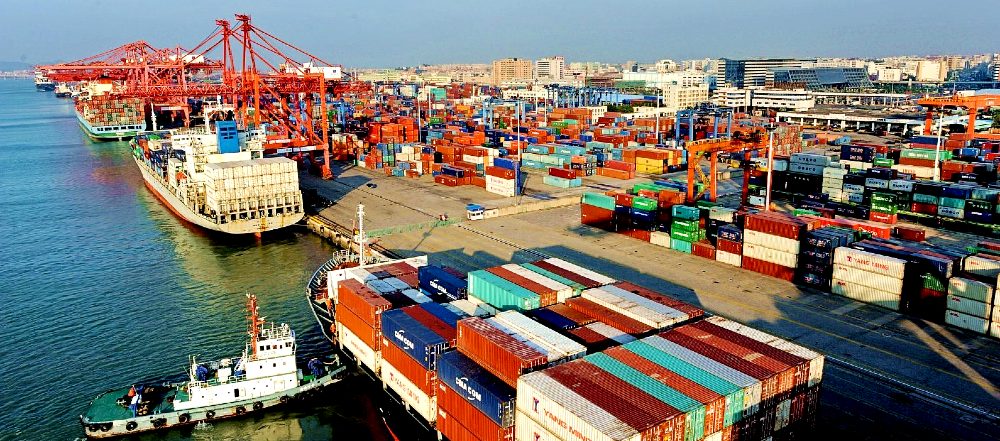
The Maritime Correspondents Organisation of Nigeria (MARCON) is set to examine the role of the maritime sector in driving Nigeria’s proposed $1 trillion productive economy at its three-day annual retreat scheduled for December 2 to 4, 2026, in Lagos.
The retreat, which will bring together policymakers, regulators, maritime operators and journalists, will focus on repositioning Nigeria’s foreign trade from dependence on raw commodity exports to production, value addition, industrialisation and competitive exports.
The main event, scheduled for December 3 at De Marii Hotel FZE, Ibeju-Lekki, Lagos, has as its theme, “From Extraction to Exchange: Recalibrating Nigeria’s Foreign Trade to Realise President Tinubu’s $1 Trillion Productive Economy.”
Discussions will centre on the capacity of ports, shipping services, marine logistics, cargo handling and trade facilitation to support domestic production and strengthen Nigeria’s competitiveness in international markets.
Among the institutions expected to make presentations are the Federal Ministry of Marine and Blue Economy, Nigerian Ports Authority (NPA), Nigeria Customs Service (NCS) and the National Single Window Secretariat.
The Ministry of Marine and Blue Economy is expected to address the development of blue economy value chains to drive local production and export growth, while the NPA will examine strategies for transforming Nigerian ports to improve trade efficiency and global export competitiveness.
Similarly, the Comptroller-General of Customs, Bashir Adewale Adeniyi, is expected to speak on the role of customs administration beyond revenue generation, particularly in trade facilitation, export competitiveness and industrial growth.
The Managing Director of SIFAX Inland Container Terminal Limited, Paul Linden, will also examine how the integration of ports, inland container terminals and logistics operations can strengthen Nigeria’s export capacity.
The National Single Window Secretariat is expected to discuss the role of digitalisation, streamlined documentation and inter-agency coordination in improving the country’s foreign trade processes.
A special Meet the Maritime Press session with Dangote Industries Limited will also feature at the retreat, providing an opportunity to examine the conglomerate’s maritime operations, including port activities, shipping, cargo handling and marine logistics.
The engagement follows MARCON’s recent tour of the Dangote Refinery, fertiliser plant and other facilities within the group’s industrial complex. Dangote Industries also participated in the previous edition of the retreat, where its President, Aliko Dangote, received the organisation’s Lifetime Achievement Award.
Other institutions expected to participate include the Federal Ministries of Finance; Agriculture and Food Security; Industry, Trade and Investment; and Art, Culture, Tourism and the Creative Economy.
The Nigerian National Petroleum Company Limited (NNPCL), Nigerian Investment Promotion Commission (NIPC), Nigeria Revenue Service (NRS), National Automotive Design and Development Council (NADDC) and Nigerian Navy are also expected to contribute to discussions.
Speaking on the objectives of the retreat, Chairman of the Planning Committee, Paul Ogbuokiri, said the gathering would provide a platform for examining Nigeria’s foreign trade priorities and the maritime industry’s contribution to the country’s economic ambitions.
He said achieving a $1 trillion productive economy required deliberate policies and investments to strengthen local production, promote value addition and expand the country’s export capacity.
According to him, the competitiveness of Nigeria’s ports, shipping and logistics systems has direct implications for the cost of doing business, investment attraction and the ability of locally manufactured products to compete internationally.
“Achieving a $1 trillion productive economy requires more than setting an ambitious target. It calls for a fundamental rethink of how we produce, move, process and trade goods,” Ogbuokiri said.
He added that the maritime sector remained central to the process because of its influence on the movement of raw materials, manufactured goods and export commodities.
The annual All Nigerian Maritime Journalists Retreat provides a platform for professional engagement, knowledge exchange and interaction between journalists and stakeholders in the maritime, shipping, transport, trade and logistics sectors.



No comments yet. Start the conversation.