
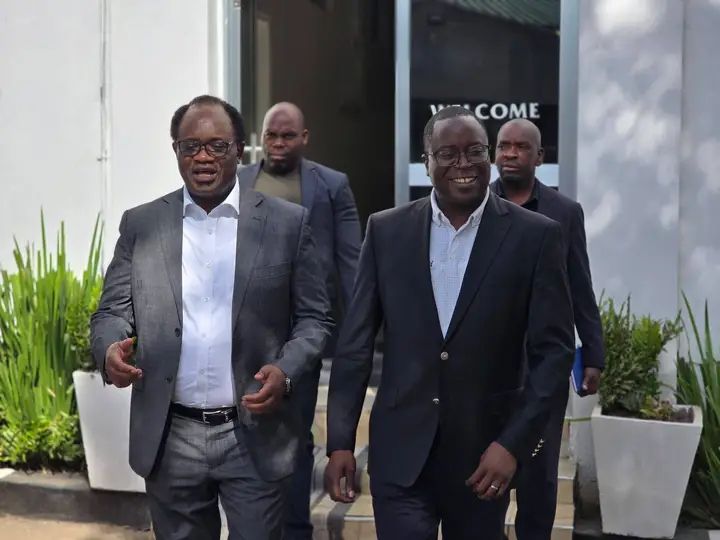
The Lusaka High Court will on November 24 deliver its ruling on a constitutional bail application by National Reconciliation Party for Unity and Prosperity (NRPUP) presidential candidate Brian Mundubile and 17 others held over treason and terrorism charges, after their lawyers told the court the accused had spent 1,128 hours in detention before going to court against a constitutional limit of 24 hours.
A three-judge panel comprising Justices Derrick Mulenga, Davies Chibwili and Ireen Wishimanga reserved the ruling after hearing submissions from the applicants and the State.
Mr Mundubile, his running mate Makebi Zulu and 16 co-accused are being held at Kabwe’s Mukobeko Maximum Security Prison. They are seeking unconditional release or admission to bail on reasonable conditions if they are not tried within a reasonable period. Mr Mundubile and Mr Zulu contested the August 13, 2026 general election on the NRPUP ticket.
Among the other applicants are former Anglican bishop Trevor Mwamba, business executive Harry Findlay and three former commandos.
In their petition, the 18 applicants allege that their constitutional rights have been violated through prolonged detention without being taken to court, falsified remand warrants, detention in unauthorised prison sections and delays in accessing medication.
They contend that continued detention while investigations remain incomplete breaches their constitutional rights, particularly the right to personal liberty and the right to be brought before court without undue delay. The State, they maintain, cannot rely on ongoing investigations to justify prolonged detention, and constitutional safeguards must be respected regardless of how complex the charges may be.
Defence lawyer Milner Katolo told the court that the applicants had presented compelling grounds showing why constitutional rights should take precedence over administrative convenience. He challenged the State’s position that investigations into treason are complicated and require considerable time, saying such considerations could not override the constitutional protection of individual liberty.
Mr Katolo said the applicants had remained in detention for an unreasonable period without being presented before court. He calculated that the period between their arrest and the filing of the constitutional application on October 12 amounted to 1,128 hours, against the 24-hour period stipulated by the Constitution.
He added that the applicants had stayed in custody even as proceedings on their constitutional bail application continued. The defence team also includes Bonaventure Mutale, Chifumu Banda and Sakwiba Sikota, who all told the court that their clients’ constitutional rights had been violated through prolonged detention.
The State, represented by Director of Public Prosecutions Gilbert Phiri, Attorney-General Mulilo Kabesha and their legal teams, opposed the application. The prosecution told the court that the offences were serious and complex and involved extensive forensic and financial investigations.
The State further submitted that the applicants posed a flight risk, could interfere with witnesses and needed to remain in detention in the interests of public safety and national security.
A second ruling involving Mr Mundubile and Mr Zulu is due before the November 24 decision. In a separate bail application in a sedition case, a three-judge panel led by Justice Geoffrey Mulenga has reserved its ruling until this Friday on preliminary objections raised by the State.
In that matter, the two are charged with two counts of seditious practices. They are accused of attempting to influence the announcement of the results of the August 13, 2026 general election through a Parallel Vote Tabulation (PVT), and of announcing on Facebook that Mr Mundubile would address the nation.
The State is challenging the Lusaka High Court’s jurisdiction to hear the application, contending that the matter was previously before the Solwezi High Court. Mr Kabesha urged the court to dismiss the application, questioning whether it could hear a bail application filed directly before it while the substantive matter remained before the Solwezi court.
The State also wants the court to determine whether filing the application in Lusaka amounts to a multiplicity of actions, and whether the applicants should first have sought bail from the subordinate court handling their trial. The objections were raised under the High Court Act and the Criminal Procedure Code Act.
Mr Sikota opposed the preliminary issue, telling the court that his clients could not have applied for bail before the Solwezi court because it lacked jurisdiction to hear the substantive matter.
The sedition objections will be decided on Friday, while the constitutional bail ruling for Mr Mundubile, Mr Zulu and the 16 others is set for November 24.
Loading read count...



No comments yet. Start the conversation.