

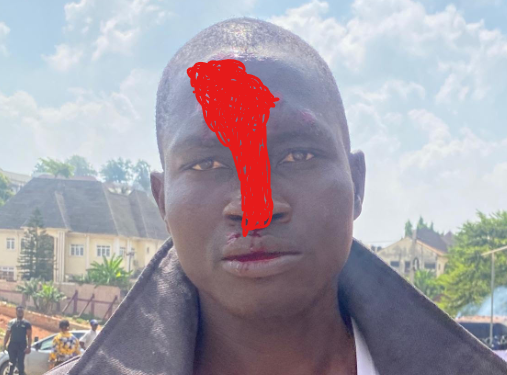
The Nigerian Guild of Editors has demanded the immediate release of investigative journalist Daniel Ojukwu, who was remanded at the Kuje Correctional Centre, Abuja, over reports questioning the expenditure of more than N147m by the Office of the Senior Special Assistant to the President on Sustainable Development Goals.
The Guild condemned the arrest, detention and prosecution of Ojukwu, a journalist with the Foundation for Investigative Journalism, describing his incarceration over the investigation as an attack on press freedom and the media’s constitutional responsibility to hold public officials accountable.
Ojukwu and the founder of FIJ, Fisayo Soyombo, are facing allegations of cyberstalking and criminal defamation in connection with the reports.
The NGE said Ojukwu had pleaded not guilty to a 12-count charge but was remanded in prison, while his bail application, initially scheduled for November 12, was adjourned until December 1.
In a statement jointly signed by its President, Eze Anaba, and General Secretary, Onuoha Ukeh, on Sunday, the Guild said it was alarmed that a journalist investigating the management of public funds was facing criminal prosecution and incarceration over his professional work.
According to the statement obtained by The PUNCH on Sunday, Ojukwu’s investigation reportedly exposed an alleged payment of more than N147m, approximately $109,000, to an Abuja-based restaurant for the construction of classrooms and a skills acquisition centre at a primary school in Lagos.
The investigation reportedly raised questions about whether the projects existed and the capacity and track record of the company awarded the contract.
The Guild argued that the issues raised by the investigation concerned public accountability and required transparent explanations from the authorities rather than the prosecution of the journalist who brought them to public attention.
“These are legitimate issues of public accountability that deserve transparent answers, not the criminalisation of the journalist who brought them to public attention,” the NGE said.
It described the resort to arrest, detention and criminal prosecution over journalistic work as a disturbing development that raised questions about the government’s commitment to press freedom, freedom of expression and Nigerians’ right to receive information.
The Guild also renewed its criticism of the use of cybersecurity laws by the police and other security agencies against journalists, accusing law enforcement authorities of deploying such legislation to harass, intimidate and bully media practitioners.
“Investigative journalism is not a crime. Asking questions about public expenditure is not cyberstalking. Demanding accountability from public officials is not defamation,” it declared.
The NGE maintained that public officeholders must accept scrutiny of their stewardship of public resources, regardless of their positions or influence.
It said the media could not effectively discharge its constitutional responsibilities if journalists faced arrest, prosecution and imprisonment for investigating alleged irregularities or asking questions about government expenditure.
While acknowledging the right of individuals to seek legal redress where they believe their reputations have been damaged, the Guild warned against using such rights to suppress legitimate journalism.
“While the Guild recognises that every individual has a right to seek legal redress where they believe their reputation has been injured, such rights must not be weaponised to intimidate journalists, suppress legitimate reporting or discourage investigations into the management of public resources,” the statement added.
The editors expressed particular concern that Ojukwu’s incarceration could discourage other journalists from undertaking investigations involving public officials and government spending.
They warned that prosecuting journalists over reports on alleged misuse of public funds could create an atmosphere in which media practitioners become reluctant to investigate matters of public interest for fear of criminal prosecution.
“When a journalist can be sent to prison over a report concerning alleged misuse of public funds, the message to other journalists is unmistakable: ‘investigate at your peril.’ Such an atmosphere is inimical to transparency, accountability and democratic governance,” the Guild said.
The NGE relied on sections 39 and 22 of the 1999 Constitution to argue that the trumped-up charges raised fundamental questions about the protection of freedom of expression and the media’s responsibility to hold government accountable.
It noted that Section 39 guarantees freedom of expression, including the right to hold opinions and receive and impart information without interference, while Section 22 recognises the responsibility of the mass media to hold government accountable to the people.
“These constitutional provisions must not remain mere declarations. They must be respected and upheld in practice,” it said.
The Guild outlined five demands, beginning with Ojukwu’s immediate release on bail pending the determination of the charges against him.
It also called for an end to the intimidation and harassment of journalists, insisting that allegations of misuse of public funds should be investigated through transparent and accountable processes rather than by targeting journalists who expose them.
The editors further demanded a review of the charges against Ojukwu and Soyombo, taking into consideration the constitutional protections for press freedom and the public interest served by investigative journalism.
They urged the police and other law enforcement agencies to stop abusing cybersecurity laws and refrain from using criminal legislation to settle disputes arising from legitimate journalistic investigations.
The Guild also called on the judiciary to protect fundamental rights and ensure that judicial processes were not turned into instruments for silencing critical voices.
“The Guild will not stand by while freedom of the press is eroded through intimidation, harassment and the misuse of the criminal justice system,” it added.
In a separate statement, the Youth-Led Coalition for Transparency and Civic Space Protection and Development, known as YouthCo, also demanded Ojukwu’s immediate release and the withdrawal of the charges against him.
- Fake agency: ICPC opposes Adeyemi’s bail, cites safety
- ICPC opposes bail for fake PFIPC DG
- NGE condemns prosecution of FIJ journalist, demands release
The coalition, convened by AdvoKC Foundation, lamented that Ojukwu’s ordeal was not his first, recounting his arrest in 2024.
It added, “Our concern is the use of criminal law and prison against a journalist for reporting on public money.”
The coalition said it was not seeking to determine the allegations before the court but was concerned about the use of criminal prosecution and imprisonment in a case arising from investigative reporting.
It also raised questions about the legal provisions under which journalists were being prosecuted, citing a March 25, 2022, judgment of the ECOWAS Court of Justice on Section 24 of the Cybercrimes Act 2015.
YouthCo said the regional court had ruled that the provision was arbitrary, vague and repressive, finding that it violated Article 9 of the African Charter on Human and Peoples’ Rights and Article 19 of the International Covenant on Civil and Political Rights.
The court, according to the coalition, ordered Nigeria to stop using the provision to prosecute people for insulting or stalking public officials online.
Although the Cybercrimes Act was amended in 2024, YouthCo said civil society organisations, including the Socio-Economic Rights and Accountability Project, had argued that the revised cyberstalking provisions remained broad enough to punish legitimate expression and had challenged them before the same regional court.
The coalition also cited the Committee to Protect Journalists as having documented at least 25 cases of journalists prosecuted under the Cybercrimes Act since its enactment in 2015.
YouthCo argued that cyberstalking provisions should protect individuals against genuine harassment and threats rather than be deployed against investigations into public contracts and government expenditure.
“A report on how a public officer spent public funds is not a threat to anyone’s life. Treating an investigation into a contract as an attempt to put an official ‘in fear of death’ stretches the offence beyond its purpose and turns it into a shield against scrutiny,” it said.
The coalition further invoked sections 35, 36 and 39 of the 1999 Constitution, arguing that the journalist’s detention raised concerns about personal liberty, the presumption of innocence and freedom of expression.
While Section 39 guarantees freedom of expression, Section 35 protects personal liberty, and Section 36(5) presumes an accused person is innocent until proven guilty.
It also cited Section 22, which assigns the mass media the responsibility of holding government accountable to the people.
YouthCo argued that a non-violent case arising from journalistic expression, in which the accused had reportedly honoured police invitations and court appearances, should not result in prolonged detention before the hearing of a bail application.
It further referred to the African Commission’s 2019 Declaration of Principles on Freedom of Expression, which it said favoured civil remedies over criminal sanctions in defamation cases.
The coalition warned that the prosecution could extend its consequences beyond Ojukwu to whistleblowers, human rights defenders and ordinary citizens who depend on journalists to bring alleged wrongdoing to public attention.
“When a reporter goes to prison for a spending story, every source and every young person thinking of speaking up learns the price,” it said.
It also linked the case to the approaching 2027 general elections, arguing that young Nigerians would need a free press to scrutinise politicians and public officials seeking their votes.
YouthCo expressed concern that proposed legislative protections for whistleblowers and human rights defenders had yet to become law.
It identified the Whistleblower Protection Bill (HB 1593) and the Human Rights Defenders Protection Bill (HB 1867) as pending before the House of Representatives, urging lawmakers to prioritise their passage.
The coalition made four demands, including an urgent hearing of Ojukwu’s bail application and his release on reasonable terms without waiting until December 1.
It also called on the Attorney-General of the Federation to exercise the powers conferred by Section 174 of the Constitution to discontinue the prosecution, while urging the Inspector-General of Police to stop using the Cybercrimes Act against journalists and return Ojukwu’s passport.
It further demanded that the Federal Government comply with the ECOWAS Court judgment and that the National Assembly amend the cyberstalking provisions to prevent the prosecution of journalists for truthful reporting or criticism of public officials.
The coalition also urged the House of Representatives to prioritise the passage of the two proposed protection bills.
YouthCo, whose membership includes Enough Is Enough Nigeria, Naija Feminist Media, Take It Back Movement Nigeria, Learn Politics, PoliZ, Insight Link Foundation and other civic organisations, said its intervention was not an attempt to exempt journalists from accountability.
“Journalism that errs can be answered, corrected, and, if proven false, remedied in a civil court. What it should never face is a prison cell for asking where public money went,” it said.



No comments yet. Start the conversation.