
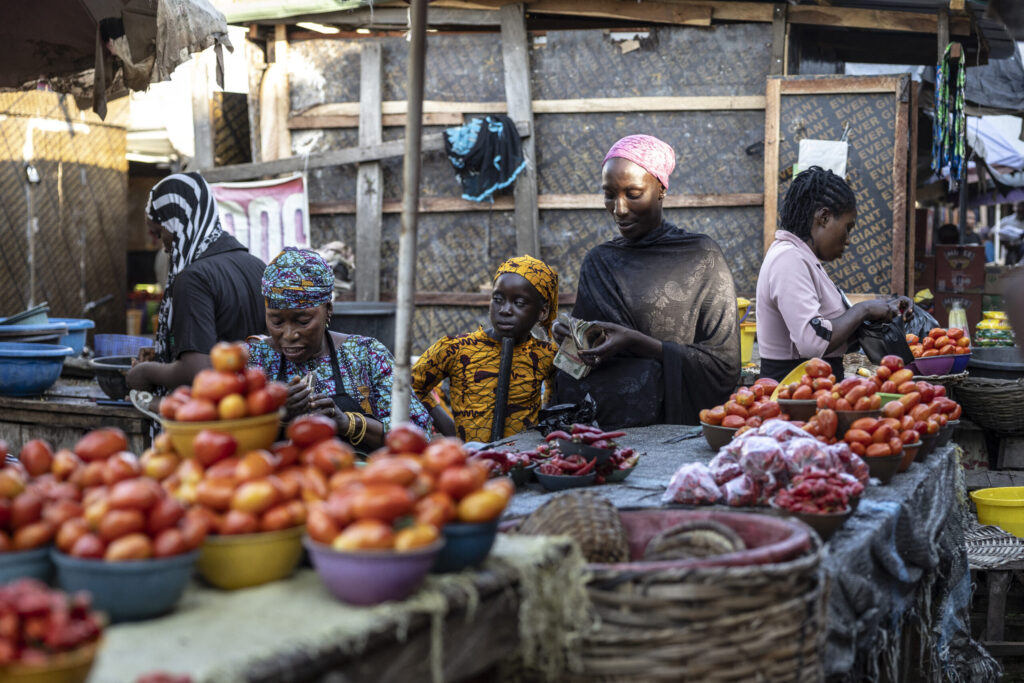
Nigeria’s push to bring inflation into single digits by 2027 faces mounting pressure from food shortages, high energy costs and election-related spending, as economists warn that monetary tightening alone may no longer be enough to sustain the decline in prices.
With headline inflation at 14.06 percent in October and food inflation still at 19.13 percent, supply constraints and rising costs could slow the disinflation process even as tighter monetary policy continues to curb underlying price pressures.
Experts who spoke with BusinessDay said high petrol and electricity tariffs, high transportation cost, poor agricultural productivity, insecurity and inefficient farm-to-market logistics could slow further disinflation, while increased spending ahead of the 2027 general election could inject additional liquidity into the economy and fuel demand-side inflationary pressures.
Olayemi Cardoso, governor of the Central Bank of Nigeria (CBN), on Tuesday reaffirmed the bank’s commitment to a consistent monetary policy direction in 2027, as it pursues its ambition of bringing inflation down to single digits.
Speaking at a briefing on the outcome of the Monetary Policy Committee (MPC) meeting in Abuja, Cardoso said the bank would stay the disinflation course, signalling that a tight policy stance could remain in place until price stability is firmly established.
He said the CBN would maintain a predictable policy direction to enable businesses to plan investments with greater certainty, while relying on data to guide decisions on interest rates and other monetary policy instruments.
Cardoso also identified stronger coordination between fiscal and monetary authorities, improved banking system buffers and more effective monetary policy transmission as priorities for the coming year.
However, Samson Simeon of Arkk Economics & Data Limited described the single-digit inflation ambition as “overly optimistic though noble”, arguing that persistent food inflation and rising election-related spending could make the target difficult to achieve.
He said monetary tightening had helped bring core inflation close to single digits, but food inflation, which remained above 19 percent in October, continued to keep headline inflation elevated.
“The monetary authorities have been hawkish for a while now and have been effective in bringing core inflation to almost single digits. The problem, nonetheless, is the food component of inflation, which has remained stubbornly high,” Simeon said.
He warned that festive-season spending and the approaching election cycle could intensify inflationary pressures, potentially worsening price conditions before any sustained improvement.
“The inflation numbers would get worse first before any chance of getting better, meaning single-digit headline numbers are unlikely by 2027,” he said.
Simeon argued that achieving the target would require aggressive coordination between fiscal and monetary authorities, particularly in addressing food production, logistics, exchange rate stability and energy costs. He also pointed to external shocks, including geopolitical tensions affecting global oil prices, as risks beyond the control of domestic policymakers.
Moyowa Amoo, chief executive officer of QLP Capital, offered a more measured assessment, putting the chances of achieving single-digit inflation at roughly 50-50, largely because of the gap between core and headline inflation.
He said the difference between core inflation of about 10.5 percent and headline inflation of 14.06 percent reflected the impact of food and energy prices, particularly petrol, whose pricing remains exposed to movements in the international crude oil market.
Unlike core inflation, which excludes volatile food and energy components, headline inflation captures the full impact of these costs on households and businesses.
“Petrol is a derivative of crude oil. Crude oil prices are globally determined and are greatly affected by geopolitics. We cannot control policy statements and manoeuvres in other countries, but they affect our prices here,” Amoo said.
He said the prospects of meeting the target would improve if geopolitical tensions eased over the next six to 12 months, reducing the risk of external oil price shocks.
Amoo also noted that the timing of the CBN’s target, particularly its possible achievement in the latter part of 2027, reflected the inflationary risks associated with election spending.
He said increased cash circulation before and during elections had historically exerted upward pressure on prices, although spending and inflationary pressures could moderate afterwards.
On the domestic front, Amoo said food production offered policymakers greater scope to influence inflation, but longstanding weaknesses across the agricultural value chain continued to constrain supply.
He identified inadequate storage infrastructure, post-harvest losses, limited mechanisation and insecurity in farming communities as major obstacles to higher agricultural output.
“A lot of food goes to waste in Nigeria today because we don’t have the appropriate storage conditions. When food goes to waste, it creates a shortage, and once there’s a shortage, prices go up,” he said.
He added that poor mechanisation and insecurity had further reduced agricultural productivity, with farmers unable to cultivate large portions of available farmland or achieve competitive yields.
According to him, addressing these constraints would help increase domestic food supply, reduce dependence on imports and ease persistent pressure on food prices.
While describing the CBN’s single-digit inflation ambition as laudable, Amoo cautioned that monetary tightening alone would not be sufficient to achieve it.
“Core inflation is already around 10 percent, and the difference between 10 and 14 percent represents a lot of work that needs to be done, half of which is not within our control. It is a laudable objective and the right way to go, but there is work to be done,” he said.
- Nigeria ranks lowest in Africa as Mauritius leads investment resilience index
- T-bill yields rise despite N6.26trn banking system liquidity
- Delta Assembly passes 2027 Appropriation Bill of N1.272trn, increases budget by 2.85%





No comments yet. Start the conversation.