
…new device delivers TB results in under 30 minutes, accepts tongue swabs, targets underserved communities
By Joseph Erunke, Abuja
Nigeria’s battle against tuberculosis (TB) is set for a major boost as the Zankli Research Centre of Bingham University unveils a new generation of portable diagnostic technology capable of delivering results in less than 30 minutes, potentially taking advanced TB testing closer to underserved communities.
The innovation, known as the PlusLife Mini Dock, is designed to overcome some of the longstanding barriers to tuberculosis diagnosis, particularly among children, elderly people and patients living with HIV who often struggle to produce sputum samples required for conventional testing.
The technology accepts tongue swabs as well as standard sputum samples, offering a less invasive alternative that could significantly expand access to early and accurate TB diagnosis, particularly in primary healthcare facilities.
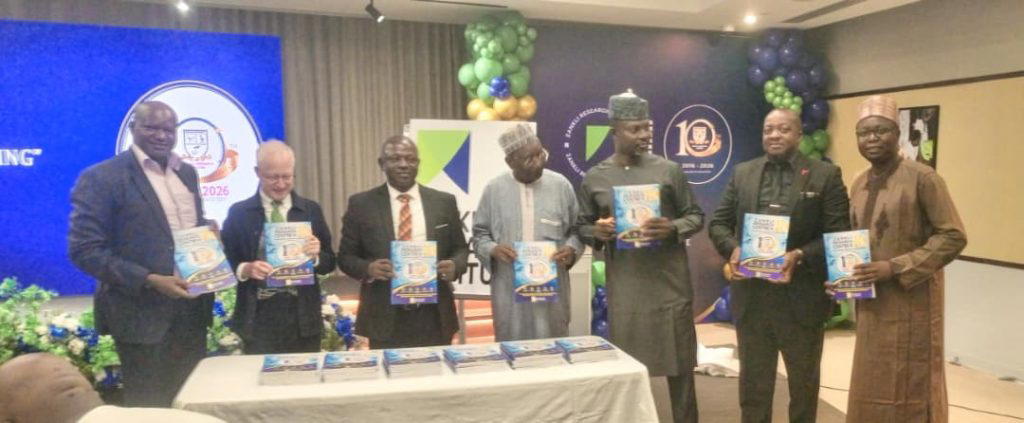
The development emerged as the Zankli Research Centre marked its 10th anniversary at Bingham University, where researchers, health experts and international partners highlighted a decade of scientific innovation, capacity building and contributions to Nigeria’s infectious disease response.
Speaking at the anniversary event, researchers disclosed that the centre was piloting the new diagnostic technology across selected locations in Nigeria, while collaborating with researchers in Uganda, South Africa and the United States.
The initiative is expected to generate evidence on the effectiveness of swab-based molecular testing and support efforts to decentralise TB diagnosis from tertiary hospitals and specialised laboratories to primary healthcare facilities.
The researchers said the technology could help close critical diagnostic gaps by making testing faster, easier and more accessible to populations that are frequently missed by conventional healthcare services.
In his keynote address, Dr Chukwuebuka Ugwu, a Postdoctoral Research Fellow at. Liverpool School of Tropical Medicine United Kingdom, who highlighted the importance of international research partnerships, said the centre’s experience demonstrated how collaboration could transform scientific research, strengthen local capacity and produce interventions with lasting impact.
Using the 1940 Dunkirk evacuation during the Second World War as an illustration, he recalled how more than 338,000 Allied troops were rescued in nine days through the combined efforts of large naval vessels and hundreds of smaller civilian boats.
He said the operation demonstrated that meaningful collaboration did not depend on the size or status of participating partners but on their willingness to contribute their respective strengths towards a common objective.
Every vessel has something to contribute,” he said, stressing that research institutions, international partners, governments and local communities must recognise the value each brings to addressing public health challenges.
He identified shared purpose, complementary strengths, mutual trust, respect and inclusive participation as essential ingredients for successful research partnerships.
According to him, the centre’s involvement in the international LIFE consortium had demonstrated how collaborative research could empower local researchers and communities while producing evidence capable of influencing national and global health policies.
He disclosed that findings from the collaboration had contributed to national strategic plans in Nigeria, Malawi and Kenya, particularly in addressing gender-related barriers to tuberculosis prevention, diagnosis and treatment.
Earlier, the Director of the centre, Associate Professor John Bimba, traced its evolution from a small laboratory established to address the absence of adequate facilities for tuberculosis research into a fully fledged research institute.
He said the journey began with a laboratory established in Abuja in the early 2000s by late Professor Loveth Lawson, with support from the Liverpool School of Tropical Medicine, after the researcher discovered that Nigeria lacked adequate facilities for tuberculosis culture and related investigations.
According to him, the laboratory eventually became the foundation for the establishment of the Zankli Research Centre in 2016, which was subsequently integrated into Bingham University’s research structure and upgraded to an institute.
He explained that equipment acquired during the centre’s early years, including a specialised tuberculosis culture system, remained operational and continued to support drug-resistant TB testing, postgraduate training and national tuberculosis control programmes.
Bimba said the centre had also become a private reference laboratory for tuberculosis in Nigeria, supporting the national programme and providing diagnostic services across the North-Central region.
He described the transformation from a basement laboratory into a research institute as evidence of what sustained partnerships, scientific curiosity and commitment to improving lives could achieve.
The anniversary documentary also highlighted the centre’s pioneering role in introducing the GeneXpert molecular diagnostic platform to Nigeria, alongside other innovations that have strengthened tuberculosis diagnosis and research capacity.
It disclosed that the institution had attracted millions of dollars in research grants, published findings in reputable national and international journals and provided research opportunities for postgraduate students from Nigeria and other countries.
The centre’s workforce, which reportedly started with about five to 10 people, has grown to more than 60, while its research funding portfolio has expanded from one or two grants to several simultaneous projects.
Beyond tuberculosis, the centre has undertaken research into HIV, COVID-19 and other infectious diseases, while contributing evidence to the World Health Organisation and supporting community-based health interventions.
One of its ongoing initiatives, the LIFE consortium, is addressing gender disparities in tuberculosis services, particularly the barriers preventing men from accessing diagnosis and treatment.
Researchers involved in the programme said although men account for about half of global TB cases, more than two-thirds of them do not receive adequate TB care and services.
The research is therefore examining how social, economic and cultural factors prevent men from accessing healthcare, with a view to developing more inclusive and gender-responsive interventions.
Another project, the R2-D2 HIV Plus study, supported by the Gates Foundation, is focused on improving diagnosis and treatment outcomes among people living with HIV to help them achieve undetectable viral loads and enjoy better quality of life.
The centre is also evaluating innovative approaches to tuberculosis diagnosis among people living with HIV, including the use of urine samples to overcome the difficulties associated with producing sputum.
In a particularly striking account of its community interventions, a researcher narrated how an AI-enabled mobile X-ray screening exercise helped identify tuberculosis in a nine-year-old girl who had become unable to walk and was reportedly abandoned by her community because her condition was wrongly attributed to witchcraft.
The girl was screened, diagnosed and placed on treatment. According to the researcher, she began walking again within about two weeks.
The account underscored the importance of taking scientific innovation beyond laboratories and hospitals into communities where poor awareness, misconceptions and limited diagnostic facilities continue to delay treatment.
The centre also conducts community-based screening and preventive treatment for latent tuberculosis infection, identifying exposed individuals and providing preventive therapy to reduce their risk of developing active disease.
The anniversary celebration equally recognised the contributions of the late Professor Lawson, whose vision laid the foundation for the institution, and Professor Luis Cuevas of the Liverpool School of Tropical Medicine, whose scientific leadership and international partnership helped establish and strengthen its research capacity.
The centre’s partners include the National Tuberculosis, Leprosy and Buruli Ulcer Control Programme, Institute of Human Virology Nigeria, Liverpool School of Tropical Medicine, Gates Foundation, KNCV Nigeria and Stop TB Nigeria, among others.




No comments yet. Start the conversation.