

Layoffs, furloughs, forced resignations, and pivots are standard vocabulary in Silicon Valley. Yet in the cutthroat world of corporate leadership, there is one move that remains the ultimate power play: getting pushed out of the corner office, only to walk right back in.
Yesterday, Nvidia CEO Jensen Huang officially joined that exclusive club.
Huang’s exit on November 12 was the kind of drama usually reserved for primetime television. Following revelations about extramarital affairs, including allegations involving a businesswoman suspected by U.S. intelligence of having ties to Chinese espionage, the chipmaker’s board showed him the door. While Beijing flatly denied the spying claims, the corporate governance and national security optics were enough to trigger an immediate crisis.
With CFO Colette Kress stepping in as interim chief, Wall Street panicked. Over an 11-day hiatus, the AI powerhouse took a historic beating, shedding at least $1.2 trillion in market value while Huang’s reputation played out in the court of public opinion. Behind the scenes, reality set in quickly. Nvidia had no obvious line of succession, and pressure began mounting from allies, including U.S. President Donald Trump.
Yesterday, November 23, the board did a complete U-turn. Citing Huang’s candor, leadership, and reassurances from senior U.S. officials that his return posed no national security threat, they unanimously reinstated him. Markets breathed a massive sigh of relief, sending Nvidia shares surging 31.5 percent and boosting Huang’s personal net worth by roughly 30 percent in a single stroke.
Huang’s whirlwind return is remarkable, even if market watchers suspected Nvidia simply couldn’t function without him. Still, he is far from the first founder to prove that you cannot keep a tenacious tech boss down. Here is how nine chief executives, including Huang himself, pulled off the great boardroom comeback.
1. Jensen Huang (Nvidia)
 Jensen Huang, chief executive officer of Nvidia Corp., speaks to members of the media following the company’s “Japan AI Ecosystem” reception in Tokyo, Japan, on Thursday, July 16, 2026. Japan is planning to buy 27,500 next-generation Rubin chips from Nvidia Corp. to build a homegrown foundational AI model for robots. Photographer: Kiyoshi Ota/Bloomberg via Getty Images
Huang’s departure on November 12, 2026, was swift, triggered by personal conduct breaches and espionage-linked affair allegations that rattled corporate governance watchdogs. Just 11 days later, on November 23, the board unanimously reversed its decision after receiving national security clearances from senior U.S. officials and feeling the heat from anxious stakeholders. Even with an independent investigation still underway, Wall Street cheered the return of the man who built the AI boom, sending Nvidia’s stock soaring 31.5% and instantly erasing the panic of his brief absence.
2. Steve Jobs (Apple)
 Steve Jobs, Apple CEO
The blueprint for every dramatic tech resurrection belongs to Steve Jobs, who was forced out of Apple in September 1985 after losing a bitter boardroom power struggle with then-CEO John Sculley. After spending over a decade building NeXT and turning Pixar into an animation powerhouse, Jobs returned in 1997 when Apple acquired NeXT, stepping in first as interim chief before reclaiming the permanent title. At the time, Apple was staring down bankruptcy with a roughly $1 billion annual loss. Jobs ruthlessly slimmed down the product lineup, launched era-defining hits like the iMac, iPod, and iPhone, flipped the company to a $309 million profit within a year, and set Apple on a trajectory to become the world’s most valuable company before his 2011 resignation.
3. Sam Altman (OpenAI)
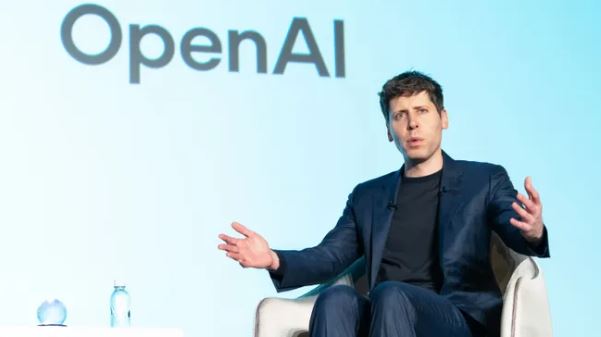 Sam Altman, OpenAI CEO
In November 2023, Silicon Valley witnessed one of the fastest boardroom coups and reversals in corporate history. On November 17, OpenAI’s board abruptly fired Altman, claiming he had not been consistently candid in his communications. Microsoft immediately moved to hire him to lead a new AI research division, prompting over 700 of OpenAI’s 770 employees to threaten a mass walkout unless Altman was brought back. Within days, the board folded, announcing his return on November 22 and formalizing it by November 29 alongside a newly reconstituted board. Since surviving the mutiny, Altman has overseen a surge that has multiplied OpenAI’s valuation nearly tenfold.
4. Jack Dorsey (formerly Twitter, now X)
 Jack Dorsey, former Twitter now X co-founder
Former Twitter co-founder, now X, experienced a revolving door at the top of the social media giant. Dorsey was pushed out as CEO in 2008 by fellow co-founder Evan Williams amid investor frustration over his outside hobbies and communication style. He crept back into the fold in 2011, took over as interim CEO in July 2015 after Dick Costolo stepped down, and secured the permanent role in September 2015 while simultaneously running payments company Square. Tasked with reviving sluggish user growth, Dorsey managed to more than double Twitter’s revenue during his second act, though consistent profitability remained elusive. By the time he handed the reins to Parag Agrawal in November 2021, Twitter’s stock had dropped 13 percent over his tenure, lagging far behind the broader market.
5. Steve Huffman (Reddit)
 Steve Huffman,Reddit CEO
Co-founder Steve Huffman walked away from Reddit in 2009, three years after publishing giant Condé Nast bought the platform, and went on to co-found the travel search site Hipmunk. Nearly six years later, in July 2015, Reddit recruited him back as CEO to steady a platform plagued by leadership turmoil and user revolts. Huffman modernised Reddit’s clunky interface, overhauled its content moderation policies, expanded its global reach, and built a legitimate advertising business. His patient turnaround culminated in March 2024 when Reddit finally made its long-awaited debut on the New York Stock Exchange.
6. Larry Page (Google)
 Larry Page, former CEO of Google
Unlike most entries on this list, Larry Page’s exit was relatively civil, though still dictated by boardroom realities. In 2001, early investors insisted on bringing in seasoned executive Eric Schmidt to provide “adult supervision” for the young search engine. Page stepped aside, biding his time for a full decade before reclaiming the CEO chair in 2011 once Google had matured into a dominant tech force. During his second stint, Page pushed the company into ambitious moonshot projects, restructured the business under the Alphabet holding company, and oversaw an expansion that saw annual revenue grow more than fivefold between 2010 and 2019.
7. Michael Dell (Dell)

After spending two decades building a PC empire out of his college dorm room, Michael Dell handed the CEO title to Kevin Rollins in 2004. By 2007, with Dell losing ground to rival Hewlett-Packard and grappling with accounting headaches, the founder stepped back into the top job. Realizing the company needed radical surgery away from Wall Street’s quarterly demands, Dell eventually took the business private in a massive leveraged buyout, successfully transforming a struggling personal computer maker into an enterprise infrastructure powerhouse.
8. Mark Pincus (Zynga)
 Mark Pincus, former chief executive officer of Zynga Inc., arrives to a morning session during the Allen & Co. Media and Technology Conference in Sun Valley, Idaho, U.S., on Thursday, July 10, 2014.
Not every founder comeback ends in triumph, as Mark Pincus discovered at social gaming maker Zynga. Having stepped down in 2013 as the company struggled to pivot from Facebook desktop games to mobile, Pincus returned to the CEO chair in 2015 hoping to recapture the magic. Investors were decidedly unimpressed, sending Zynga’s stock tumbling 18 percent on the news of his return. After the company posted a steep $117 million loss that year, Pincus bowed to reality and stepped aside once again just 11 months later.
9. Matt Mullenweg (Automattic)
 Matt Mullenweg, CEO of Automattic, parent company of WordPress
When a founder holds enough structural leverage, a boardroom ouster rarely sticks. In September 2026, the board of Automattic, the parent company of WordPress.com, placed co-founder Matt Mullenweg on leave amid internal governance friction. Just three days later, Mullenweg was back in complete control. Rather than making peace with the directors who tried to sideline him, he swiftly replaced the board members behind the move, offering a blunt reminder that in Silicon Valley, timing your exit is important, but owning the room on your return is everything.
- African venture studios hold $2m funding opportunity as investors overlook 332 start-ups
- Nigeria records £404m trade surplus with UK as British exports fall 25.9%
- Nvidia offers little shelter from Nigeria’s bank dividend drought





No comments yet. Start the conversation.