
By Gabriel Ewepu
ABUJA – Stakeholders in the nation’s agricultural and environmental sectors have called for increased investment in organic agriculture and agroecological practices to strengthen food security, improve farmers’ livelihoods, protect natural resources and build resilient food systems.
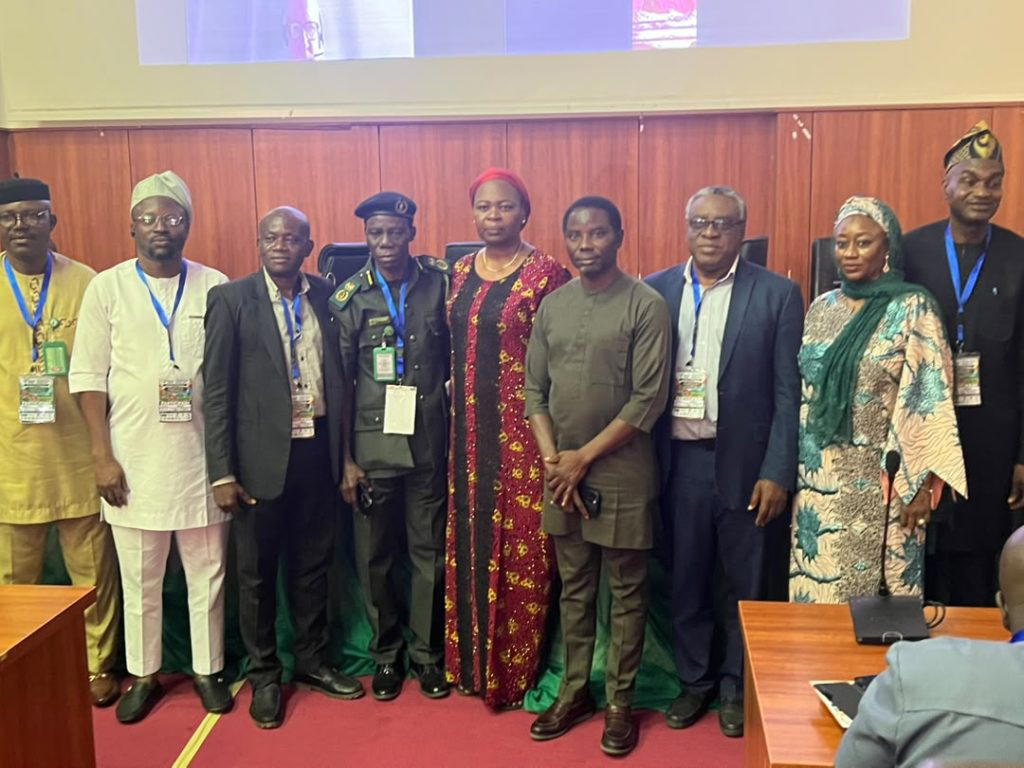
The call was made at the 2026 National Organic and Agroecology Business Summit, NOABS, National Conference and Policy-to-Action Dialogue, held on Tuesday, in Abuja, with the theme ‘From Evidence to Action: Advancing Farmers’ Rights, Responsibilities and Agroecological Food Systems Transformation in Nigeria’.
The summit brought together government representatives, policymakers, agricultural experts, farmers, researchers, development partners and private-sector stakeholders to explore practical strategies for advancing organic agriculture and accelerating Nigeria’s transition towards sustainable food systems.
Speaking at the event, the National President of the Organic and Agroecology Initiative of Nigeria, ORAIN, Peter Bakare, called for a strategic repositioning of Nigeria’s agricultural sector through sustainable farming practices that protect soil health, safeguard public health and create viable economic opportunities for farmers and agribusiness investors.
Bakare observed that Nigeria was at a critical crossroads, facing increasing food demand, environmental degradation and growing concerns over the indiscriminate use of synthetic chemicals and pesticides, all of which pose significant challenges to agricultural sustainability and public health.
He noted that the increasing demand for safe, nutritious and chemical-free food presents significant opportunities for Nigerian farmers and agribusinesses to expand the organic agriculture market locally and internationally.
According to him, NOABS 2026 was designed to move discussions beyond policy commitments to practical business engagements, focusing on soil restoration, quality assurance, the development of organic agricultural value chains and the creation of sustainable markets for locally produced organic products.
He also emphasised the importance of stronger partnerships among smallholder farmers, private-sector investors, research institutions and regulatory agencies, particularly the National Agency for Food and Drug Administration and Control, NAFDAC, and the Standards Organisation of Nigeria, SON, to strengthen standards, build consumer confidence and accelerate the growth of the organic agriculture sector.
In his goodwill message, the Mandate Secretary, Agriculture and Rural Development Secretariat, Federal Capital Territory Administration, FCTA, Abdullahi Suleiman Ango, reaffirmed the FCT Administration’s commitment to sustainable agriculture through farmland protection, rural infrastructure development, farmer support programmes and agricultural enterprise development.
Ango disclosed that approximately 270,000 hectares of land in the FCT had been earmarked for farming, with an additional 270,000 hectares designated for forest development, creating significant opportunities for agricultural production and environmental conservation.
Ango highlighted the administration’s investment in farm-to-market roads across several rural communities, including Ibwa in Gwagwalada Area Council; Pai, Dagiri-Baza, Gomani and Dafa in Kwali Area Council; as well as Kuje and other farming communities.
He explained that the road projects had improved farmers’ access to farmlands and markets, creating a more enabling environment for agricultural investments and rural economic activities.
He further disclosed that, through the FCT ACReSAL project, organic fertilisers were distributed free of charge to farmers during the previous farming season to encourage the adoption of environmentally sustainable agricultural practices.
On dry-season farming, the Mandate Secretary revealed that farmers’ clusters had benefited from the provision of tubewells and solar-powered water pumping machines, contributing to increased agricultural production and improved farmers’ incomes.
He also highlighted the modernisation of the women’s cassava processing centre in Kwali as part of efforts to strengthen rural agricultural enterprises, promote value addition and improve economic opportunities for women.
Describing sustainable agriculture as a system that meets present food and economic needs without compromising the ability of future generations to meet theirs, Ango stressed the importance of balancing economic profitability, environmental protection and social inclusion.
He identified farmland protection as a critical incentive for sustainable agricultural investment, noting that the FCT’s land administration framework provides designated farmlands with titles and relevant documentation to give investors the confidence to make long-term commitments.
He cited several large-scale agricultural investments in the territory, including Contee Global Agro-Organic Banana Plantation, a 250-hectare project in Kamadi Sabo, Kwali; SCL Farm in Dama Kusa, Kwali; Ginormous Farm Estate; JAMS Organic Farms in Gaube, Kuje; Miposh Farm Limited; Jeffy Ochy Farms Limited; KC Bencharis/Kuchiyako Farm Project; and Almat Farms in Kuje.
According to him, these investments are contributing to rural employment, encouraging agricultural entrepreneurship and demonstrating the economic potential of organic and agroecological farming.
He also highlighted opportunities for youth participation in agriculture, particularly through organic honey production, capacity-building programmes and the distribution of beekeeping equipment to more than 150 young people in 2024.
He identified mushroom farming as another emerging agricultural enterprise with considerable income-generating potential for young entrepreneurs.
The Mandate Secretary called for stronger collaboration among government institutions, area councils, traditional rulers, private-sector investors and farmers to advance sustainable agricultural development.
While urging private investors to explore opportunities in agricultural processing and transportation, he encouraged farmers to organise themselves into cooperatives, embrace modern technologies and maintain proper farm records.
He particularly advised farmers against selling their farmlands, describing land as a critical asset for sustainable agricultural investment, generational wealth creation and long-term economic prosperity.
Also, a representative of the Federal Ministry of Agriculture and Food Security, the Director of the Farm Inputs Support Services (FISS) Department, reaffirmed the Ministry’s commitment to advancing farmers’ rights and responsibilities while promoting agroecology as a pathway to transforming Nigeria’s food systems.
He disclosed that the Ministry had facilitated farmers’ access to safe, affordable and effective agricultural inputs through free and subsidised input distribution programmes under the National Agricultural Growth Scheme and Agro-Pocket (NAGS-AP).
He further highlighted the Ministry’s efforts towards input regulation and inspection, emphasising the importance of ensuring that only certified agricultural inputs are sold through registered producers and distributors.
According to him, the Ministry registers both organic and inorganic fertilisers and other agricultural inputs to ensure their safety, effectiveness, contribution to agricultural growth and protection of human health.
He stressed that the promotion of organic agriculture and agroecology was also central to Nigeria’s economic diversification and food security objectives, requiring coordinated and sustained collaboration among government institutions, the private sector and civil society organisations.
The Conservator-General of the National Park Service underscored the strong connection between environmental conservation and sustainable agricultural development, noting that the transformation of Nigeria’s food systems must go hand in hand with the protection of biodiversity and natural resources.
He observed that growing concerns over food insecurity, climate change, biodiversity loss and environmental degradation had made the adoption of sustainable agricultural practices increasingly important.
According to him, Nigeria’s national parks and other protected areas play essential roles in preserving biodiversity, protecting wildlife, maintaining ecological balance and safeguarding natural resources that support human livelihoods.
He explained that agroecological and organic farming practices offer significant opportunities to minimise environmental degradation, improve soil health, conserve water resources, protect pollinators and strengthen the resilience of farming communities against climate change.
The Conservator-General particularly urged farmers and other agricultural stakeholders to adopt responsible land-use practices that prevent encroachment into protected areas, minimise habitat destruction and promote peaceful coexistence between rural communities and wildlife.
He also called for stronger collaboration among conservation agencies, farmers, policymakers, researchers and local communities, stressing that environmental protection and sustainable agricultural development require collective responsibility.
He reaffirmed the National Park Service’s commitment to supporting partnerships and initiatives that promote environmental sustainability and the responsible management of Nigeria’s natural heritage.
The goodwill messages from the FCTA, Federal Ministry of Agriculture and Food Security, and National Park Service collectively reinforced the importance of positioning sustainable organic agriculture beyond an alternative farming approach to a strategic driver of national food security, economic development, environmental protection and rural transformation.
With growing opportunities in organic food production, agricultural processing, export markets and climate-resilient farming, NOABS 2026 provided an important platform for stakeholders to strengthen partnerships, explore investment opportunities and develop practical solutions for transforming Nigeria’s agricultural landscape.
The summit further highlighted the need for stronger policy implementation, improved access to quality agricultural inputs, investment in rural infrastructure, effective regulation, research and innovation, and greater participation of farmers, women and young people in sustainable agricultural value chains.


No comments yet. Start the conversation.