
By Adeola Badru
The Oyo State Government has challenged technology developers, innovators and digital entrepreneurs to harness the transformative power of Artificial Intelligence (AI) to tackle governance challenges, promote economic inclusion and improve the quality of life of residents.
The government said the growing adoption of AI and digital innovation presented an opportunity for technology professionals to develop practical solutions that would make public services more accessible, strengthen accountability and expand economic opportunities across the state.
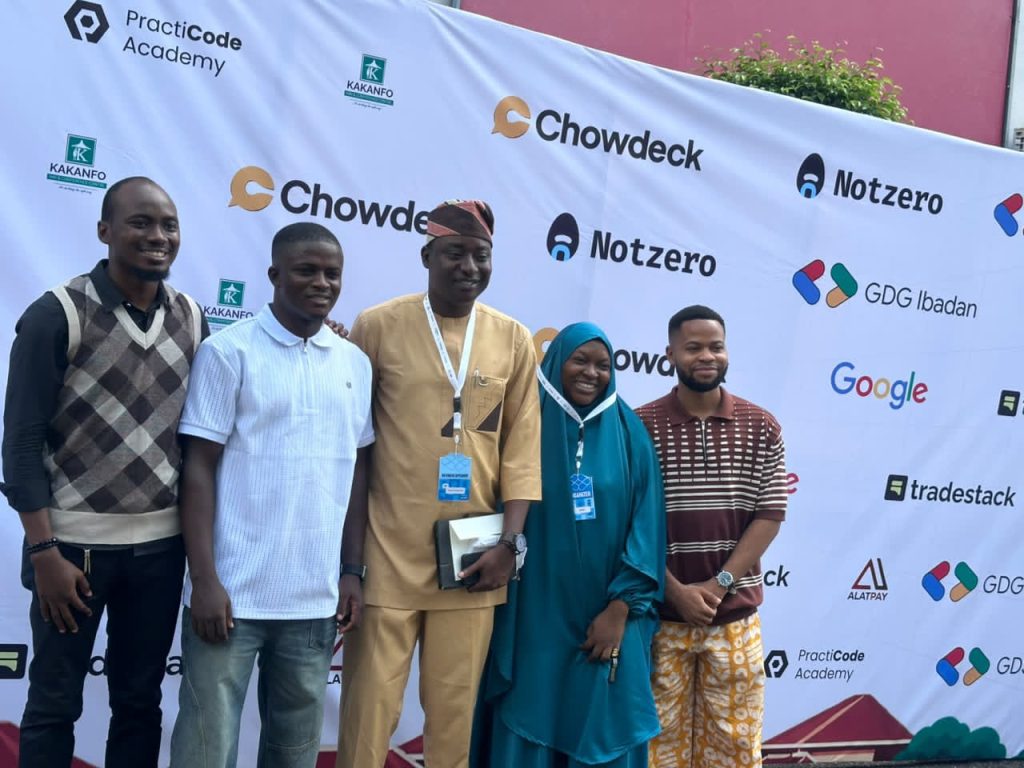
The Special Assistant on Communication to Governor Seyi Makinde, Oladayo Ogunbowale, made the call while delivering the keynote address at the 2026 edition of DevFest Ibadan, held at the Kakanfo Inn and Conference Centre, Ibadan.
Speaking on the theme, “Building the Future: How AI and Digital Innovation Can Transform Governance and Society,” Ogunbowale described technology as a critical instrument for building a more responsive, transparent and inclusive system of governance.
He urged developers to move beyond the creation of commercial technological products and focus on solutions that directly address the challenges confronting individuals, communities and public institutions.
Ogunbowale said the Oyo State Government was already laying the foundation for digital transformation, citing the state’s internally generated revenue of N103 billion in 2025, which he said exceeded the combined revenue of the two preceding administrations.
He attributed the achievement to the strategic deployment of science, data and technology in government operations, particularly in plugging financial loopholes, reducing fraud and improving revenue generation in critical sectors, including lands and housing.
According to him, the experience of the state demonstrates how technology can be deployed to improve public-sector efficiency, strengthen financial management and deliver tangible benefits to citizens.
He maintained that the ultimate objective of technological advancement should be to make government services more accessible, ensure greater accountability in the management of public resources and create economic opportunities for a wider section of society.
Highlighting the potential of AI in governance, Ogunbowale identified accessibility, efficiency and transparency, as well as economic inclusion, as three major areas in which the technology could make significant contributions.
He explained that AI-powered platforms could bridge communication gaps between government and residents, particularly those in rural communities, by making information and public services more accessible to people regardless of their location.
He also noted that adaptive learning technologies could improve educational delivery by providing pupils with more personalised learning experiences suited to their individual needs.
Ogunbowale said data analytics and machine learning could strengthen the monitoring of public expenditure, identify irregularities and improve the detection of financial misconduct.
He stressed that the benefits of AI must extend beyond government institutions and large corporations, urging developers to ensure that small and medium-scale enterprises were not excluded from the digital transformation process.
He said the adoption of AI by smaller businesses would be essential to achieving meaningful economic inclusion, adding that digital innovation should create opportunities for businesses of different sizes to improve productivity and remain competitive.
Addressing the technology community, Ogunbowale challenged developers to prioritise locally relevant solutions rather than depend entirely on foreign technologies and artificial intelligence models.
He argued that Nigeria needed home-grown AI systems capable of understanding its languages, cultures and unique societal realities, stressing that technological solutions must reflect the experiences and aspirations of the people they were designed to serve.
“Technology is only the means. You are the force that makes the means meaningful. As you build, build for people,” he told participants.
Earlier, the Google Developer Groups (GDG) Ibadan Lead, Abidemi Tiamiyu, described DevFest as an annual, community-driven technology festival designed to equip participants with practical digital skills, expose them to emerging technologies and provide opportunities for mentorship.
He explained that the programme offered hands-on workshops covering Google products, artificial intelligence, coding and other technological tools that participants could deploy to improve their productivity and professional capabilities.
Tiamiyu disclosed that the organisers recorded more than 2,500 participants at the previous edition and were targeting over 3,000 attendees for the 2026 festival.
He expressed confidence that the projected turnout would surpass the previous year’s figure, adding that the event had continued to attract participants and speakers from different parts of Nigeria and beyond.
He said the festival brought together technology enthusiasts and professionals from locations including Lagos, Ekiti and Accra, Ghana, providing a platform for knowledge-sharing, networking and collaboration.
Speaking on the achievements of the initiative, Tiamiyu said DevFest had continued to empower individuals with valuable technological skills, mentorship and the guidance needed to navigate the rapidly evolving digital landscape.
He further emphasised that artificial intelligence had become an important tool for productivity, warning that individuals who failed to incorporate it into their daily activities risked falling behind in an increasingly technology-driven world.
According to him, the growing influence of AI across different sectors made it imperative for individuals to acquire the relevant skills and remain adaptable to emerging technological developments.
Also speaking, the Co-Lead of Google Developer Groups Ibadan and software engineer, Joshua Odejide, said one of the major objectives of DevFest was to transform participants from ordinary consumers of technology into independent product builders.
Odejide explained that advancements in AI were making it increasingly possible for individuals to develop websites, create graphics and build digital products without necessarily depending on external professionals for every task.
He said the development had created opportunities for individuals to turn their ideas into practical solutions, provided they were willing to learn and acquire the necessary skills.
Odejide, however, cautioned that artificial intelligence was changing employment expectations, warning that professionals who failed to adapt to emerging technologies could find themselves at a disadvantage in the evolving labour market.
He urged professionals to see AI not merely as a threat to employment but as a tool that could be integrated into their respective fields to improve efficiency, expand their capabilities and deliver better results.
Odejide said the changing nature of work meant that professionals would increasingly be judged by their ability to deliver results and demonstrate the value they could offer beyond what AI could independently accomplish.
“Whatever has been given to people over time, the standard now is: what can you achieve? What can you do for me that AI cannot do for me? And if I can do it, how can AI help me increase my productivity?” he said.




No comments yet. Start the conversation.