
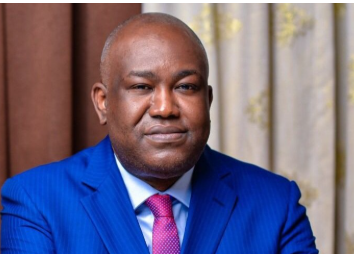
By ODIAKA OLIKA
Watching the recent exchange between the presidents of the NLC and TUC, one is struck by a disturbing irony. While organised labour debates the welfare and representation of Nigerian workers, millions of Nigerians continue to struggle with the cost of getting to work, school, markets and other essential destinations. The Federal Government’s distribution of just 90 buses across the 36 states, accompanied by short-term transport support arrangements, illustrates the limitations of its approach to Nigeria’s transportation crisis. Despite such interventions, the underlying problem remains largely unresolved. The issue is not simply that Nigerians cannot afford transportation. It is that we have failed to build an affordable, efficient and sustainable national mass transit system. Nigeria cannot keep treating the symptoms of economic hardship while ignoring their structural causes. Distributing buses and providing temporary transport support may offer immediate relief, but they cannot substitute for a properly designed national mass transit system. The objective should not be to help Nigerians cope with expensive transportation, but to build a country where transportation is no longer prohibitively expensive.
In February 2026, Dr. Gbenga Olawepo-Hashim called for what he described as a “Roosevelt-style New Deal” to revive Nigeria’s economy. The reference was to Franklin D. Roosevelt, the American president who confronted the Great Depression of the 1930s with an ambitious programme of public works, infrastructure development, employment creation and institutional reform. The New Deal was not simply about spending public money. It was about mobilising public institutions, private enterprise, labour and national resources around the task of rebuilding America’s productive capacity.
Hashim’s proposition deserves attention because Nigeria faces a challenge that goes beyond temporary economic relief. We need to reorganise our institutions, mobilise investment and rebuild the productive foundations of our economy. The question is how to translate that ambition into practical programmes that create industries, develop infrastructure, generate employment and expand national productive capacity.
China offers another important lesson. Its extraordinary infrastructure and industrial expansion did not happen by accident. It was driven by sustained national commitment, coordinated investment, standardised designs, technology absorption and an institutional system capable of executing priority projects at extraordinary speed. Nigeria does not need to replicate China’s political or economic system. What Nigeria must learn from China’s experience is the seriousness of purpose, coordination of national resources and discipline of execution that sustained its extraordinary expansion of infrastructure and industrial capacity over several decades. Hashim’s ambition is to build a $4 trillion Nigerian economy within eight years, driven by production, manufacturing, infrastructure and the full mobilisation of our institutions and people. He has also proposed mobilising up to $500 billion in investment over two years through innovative financing instruments capable of crowding in private capital. Achieving these ambitions will require detailed financing arrangements, institutional reforms and a sustained expansion of domestic productive capacity. The challenge is to mobilise capital productively without relying solely on conventional borrowing or higher taxes.
Under this vision, national institutions must become engines of economic transformation. The Defence Industries Corporation of Nigeria (DICON) will be fundamentally repositioned and equipped with a far more ambitious and innovative mandate than the limited direction in which the present administration is taking it. We will transform it into a strategic anchor of Nigeria’s industrial renaissance, building domestic capabilities in reverse engineering, precision engineering, machine-tool production, advanced fabrication and heavy industrial manufacturing. Our ambition goes far beyond manufacturing military equipment. Working alongside a dedicated national industrial and transportation manufacturing programme, we will develop the capacity to produce mass transit buses, commercial vehicles, sea ferries, tugboats, barges, smaller container vessels, excavators, bulldozers, graders, cranes, agricultural machinery, industrial generators, transformers and other critical infrastructure equipment. We will invest in machine tools, precision engineering, hydraulic systems, industrial pumps, bearings, gears and the components that form the backbone of modern manufacturing. We must develop the capacity to manufacture the machinery that builds our roads, constructs our bridges, mechanises our farms, develops our mines, powers our industries and moves our goods.
Nigeria must aspire to become one of Africa’s leading centres for heavy equipment manufacturing and industrial engineering, operating at a scale and level of technological ambition that can position the country as a major supplier to the continent. We must stop being a country that perpetually imports the machinery, equipment and technology required to develop itself. We must acquire the capacity to reverse-engineer, design, manufacture, maintain and eventually export these products across Africa.
Government procurement will become a strategic instrument of industrial policy, deliberately creating markets for Nigerian manufacturers, accelerating technology transfer, developing domestic supply chains and generating skilled employment. Every public investment must be assessed against its capacity to generate measurable economic returns, expand domestic productive capacity and deliver long-term value for money. Through strategic international partnerships, technology licensing, local research and development, and the systematic development of Nigerian engineering talent, we will build industries that can compete beyond our borders. Every bus, ferry or piece of construction equipment manufactured locally will create skilled jobs, deepen domestic supply chains and retain value that would otherwise leave the country.
We will not simply buy our way into development. We will build the machines, manufacture the equipment and develop the industrial capabilities that make development possible. Public expenditure must shift from purchasing finished assets to building the productive capacity of the Nigerian economy. We will transform Nigeria’s neglected inland waterways into strategic economic corridors. Decades of conventional dredging contracts, recurring expenditure and fragmented interventions have failed to deliver sustainable navigable channels, leaving enormous economic potential untapped.
We will break this cycle through a better coordinated national dredging and waterways development programme, combining the engineering and logistical capabilities of the Nigerian military with specialist marine engineering firms, hydrographic survey experts, naval architects and dredging contractors. The programme will be backed by modern hydrographic surveys, continuous channel maintenance and measurable delivery targets.
Alongside strategic inland ports and expanded ferry networks, we will deploy purpose-built cargo vessels, including smaller container ships capable of carrying 100 or more containers on suitable routes, subject to detailed hydrographic assessments and navigational requirements. We will integrate these waterways with our coastal shipping network, creating viable alternatives to road transportation. The result will be lower logistics costs, reduced pressure on highways, faster movement of agricultural and industrial goods, and new trade corridors connecting Nigeria to markets across West and Central Africa. Our waterways must cease to be neglected geographical features and become productive arteries of national commerce.
Our objective is to give Nigerians choices in how they move, trade, work and connect with one another. A farmer in Benue, a trader in Kano, a manufacturer in Aba and a student in Maiduguri should have access to affordable, reliable and efficient transportation, regardless of where they live or what they earn. No part of Nigeria should feel isolated because of the absence of roads, waterways or affordable transport alternatives. By connecting our cities, rural communities, agricultural belts and commercial centres through an integrated transportation network, we will open up opportunities, bring communities closer, stimulate economic activity and strengthen the bonds that hold our country together. Infrastructure must do more than move goods and people. It must unite our communities, expand shared prosperity and ensure that every Nigerian has a stake in the opportunities of this country. Equally important is the condition of our road infrastructure. The Nigerian Army Corps of Engineers possesses valuable engineering, logistical and organisational capabilities that should be better integrated into national development. We will build on these capabilities through a strengthened national infrastructure engineering and delivery framework in which military engineering expertise supports civilian infrastructure agencies, leading domestic contractors and technical institutions. With clear mandates, ring-fenced resources and enforceable delivery timelines, our priority road networks will finally receive the emergency attention they have been denied for decades.
Our ambition is to rehabilitate and restore a prioritised network of critical roads across the federation within two years, working in partnership with state governments and focusing on strategic federal highways, agricultural corridors and routes connecting major commercial and maritime centres. To achieve this aggressive timeline, we will launch a round-the-clock construction programme on selected priority corridors. Military engineering capabilities will provide technical support, security and operational continuity in high-risk areas, while civilian agencies retain primary responsibility for design, execution, supervision and long-term maintenance. Properly structured private-sector tax-credit frameworks, subject to transparent eligibility criteria, independent verification and rigorous fiscal oversight, will help mobilise additional financing. Pavement choices, whether concrete or asphalt, will be determined by traffic loads, soil conditions, drainage, engineering suitability and lifecycle costs, with preference given to durable, locally manufactured materials wherever they meet the required standards. We will replace the culture of endless road contracts, abandoned projects and inflated costs with measurable milestones, transparent procurement and enforceable completion deadlines.
The economic implications are enormous. Every bus manufactured locally creates opportunities for employment, steel production, electrical engineering, electronics, component manufacturing and technical skills development. Every ferry and container vessel built domestically strengthens our marine engineering capabilities. Every kilometre of rehabilitated road reduces transportation costs, improves agricultural market access and expands the commercial opportunities available to businesses. These are not isolated infrastructure projects. They are interconnected investments in national productivity. This is how infrastructure investment becomes industrial policy.
The choices we make in the 2027 elections will echo through generations. We owe it to our unborn grandchildren to ensure they do not inherit a country perpetually playing catch-up with the rest of the world. Our children deserve a Nigeria where they can compete on equal terms with their counterparts in Europe, America, Asia and beyond, without being constrained by infrastructure deficits and structural disadvantages that generations of failed leadership have allowed to persist.
The time for superficial interventions, recycled promises and the management of national decline is over. Nigeria needs leadership that understands the relationship between infrastructure, industrialisation, employment and national prosperity. We need a government prepared to mobilise our institutions, resources, engineers, entrepreneurs and financial capital around a single overriding objective: building a productive, competitive and industrialised nation.
The question before Nigerians in 2027 is not simply who can manage the country. It is who has the vision, the courage and the capacity to reorganise it for transformation. We cannot keep doing the same things and expect a different Nigeria. We cannot continue importing our development while exporting the opportunities that should belong to our people.
Dr. Gbenga Olawepo-Hashim has called for a Roosevelt-style New Deal. Nigeria must now translate that ambition into a programme of national economic mobilisation: one that puts our institutions, capital, engineers, entrepreneurs and workers to work building the productive foundations of a modern economy. The 2027 election must mark the beginning of that transformation. Not another cycle of promises, but a decisive break with the past. Not a government content with distributing temporary relief, but one determined to organise the productive capacity of an entire nation.
That is the Gbenga Hashim Advantage.
•Olika is Senior Adviser on Economic Policy and Strategy to Dr. Gbenga Olawepo-Hashim, Accord Party presidential candidate.



No comments yet. Start the conversation.