
By Abdulmalik Suleiman
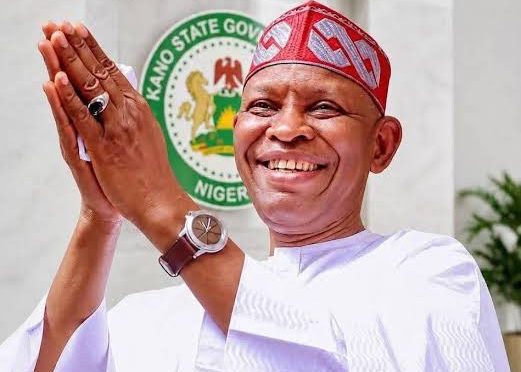
A walk through Kano today offers supporters of Governor Abba Kabir Yusuf’s administration an opportunity to point to what they describe as signs of renewal, improved public infrastructure and a renewed focus on development.
The governor’s three years in office have been marked by efforts to address challenges in education, infrastructure, public facilities and service delivery. His supporters argue that these initiatives reflect a commitment to planning, accountability and people-centred governance.
Before the current administration assumed office, Kano faced several development challenges, including concerns about the state of educational infrastructure, road conditions, public facilities and the management of government resources. Governor Yusuf’s administration has since made these areas central to its development agenda.
Within three years, the government says it has pursued a range of projects and reforms aimed at improving living conditions and restoring public confidence.
There is no doubt that Governor Yusuf’s performance has become an important part of the political conversation in Kano. His supporters believe his administration’s achievements also complement President Bola Ahmed Tinubu’s Renewed Hope agenda, arguing that a stable and developing Kano can contribute to national progress.
While the Federal Government promotes its Renewed Hope programme, Yusuf’s supporters say his administration is pursuing similar development objectives at the state level through investments in education, infrastructure and public services.
They maintain that his leadership has helped strengthen confidence in the state and advance efforts to improve governance.
Governor Yusuf has placed considerable emphasis on education, including the declaration of a state of emergency in the sector.
According to figures attributed to the state government, more than 4.7 million pupils were previously learning under difficult conditions, including inadequate classroom facilities. The administration says it has constructed more than 1,800 classrooms and renovated over 2,500 others across the state’s 44 local government areas.
The government also reports the delivery of more than 80,000 desks, chairs and other furniture, alongside the provision of boreholes, solar-powered lighting, textbooks and school uniforms.
The administration has also highlighted measures aimed at improving teachers’ welfare. It says more than 19,447 teachers employed under the Better Education Service Delivery for All (BESDA) programme have been confirmed as permanent and pensionable staff, while over 16,000 additional teachers have been recruited.
Promotions have also reportedly been approved for more than 20,000 teaching and non-teaching staff.
The administration has linked these interventions to improvements in educational outcomes. It has also cited Kano students’ performance in the 2025 National Examinations Council (NECO) examinations, claiming that they recorded the country’s best results in Mathematics and English. The specific performance data and basis for the national ranking should, however, be established through official NECO records.
For supporters of the government, the reported investments in education represent an important step towards improving access to learning and strengthening the state’s education system.
The administration has also focused on the rehabilitation and redevelopment of public parks and recreational facilities.
It says parks that previously generated about ₦5 million annually are being repositioned to generate a projected ₦90 million in annual revenue following rehabilitation. The projection represents a significant potential increase, although the actual revenue performance will depend on the facilities’ operations and financial records.
Audu Bako Park, Nassarawa Park, Kakuri Park and Green Park are among the facilities identified for redevelopment. The projects are intended to provide modern recreational spaces, including food courts, children’s parks, diplomatic gardens and facilities for elderly residents.
The government believes the improvements could make Kano more attractive to residents, visitors, investors and tourists while contributing to efforts to improve the urban environment.
Beyond infrastructure and public facilities, education has remained a major component of the state’s budgetary priorities. The administration’s supporters say the sector received the largest share of the state budget in 2024, 2025 and 2026. The exact allocations and their proportion of total expenditure should be assessed against the state’s approved budget documents.
The governor’s recent cabinet reshuffle has also been presented by supporters as an effort to strengthen governance and improve service delivery. The inclusion of professionals and individuals with experience in different fields, they argue, could enhance the capacity of government institutions to meet the state’s development needs.
Rather than dwell on the challenges inherited by his administration, supporters say Governor Yusuf has focused on addressing them through policies, projects and institutional reforms. The extent of the progress can be assessed through independently verifiable records, project completion reports and the experiences of residents across the state.
While critics may question aspects of the administration’s performance, supporters maintain that developments in schools, parks, public facilities and other sectors demonstrate a commitment to improving Kano.
For them, the debate over the state’s political future should also consider the importance of sustaining ongoing projects and consolidating existing gains.
Governor Yusuf’s supporters argue that his continuity beyond 2027 would provide an opportunity to deepen the administration’s development agenda, complete ongoing initiatives and pursue further improvements in public services.
Their position is that sustained leadership and consistent policies could help secure long-term benefits for children, schools, markets and communities across Kano State.
Governor Abba Kabir Yusuf’s administration has placed considerable emphasis on education, infrastructure and public-sector reforms. Whether these efforts translate into lasting improvements will ultimately be measured by independently verifiable results and their impact on residents.
For his supporters, Kano’s development journey is still unfolding, and they believe the progress recorded so far provides a basis for continuity and further consolidation.



No comments yet. Start the conversation.