
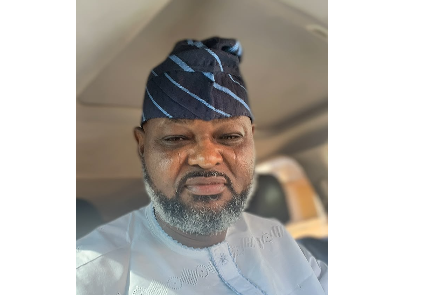
Public affairs analyst, Otunba Lukman Taiwo Bakare, has urged President Bola Tinubu to strengthen the implementation of his economic reforms, saying increased investment in electricity, agriculture and export-oriented industries is critical to achieving sustainable economic growth.
Bakare, in an open letter to the President, acknowledged the administration’s political will in introducing major economic changes, including petrol subsidy removal and foreign exchange liberalisation, but expressed concern that the reforms had not been matched with adequate implementation and strategic investments.
He argued that Nigeria’s economic challenge was not necessarily a lack of sound policy ideas but the failure to translate policies into measurable improvements in productivity, employment and living standards.
According to him, the government must shift its focus from policy announcements to practical interventions capable of expanding domestic production, generating foreign exchange and improving Nigerians’ purchasing power.
Subsidy removal needs stronger interventions
On petrol subsidy removal, Bakare described the decision announced by Tinubu on May 29, 2023, as an important economic reform, noting that the previous subsidy arrangement had become increasingly unsustainable.
However, he faulted the government’s handling of its consequences, particularly the absence of adequate measures to cushion the impact of rising transportation and living costs.
He said he had earlier proposed that the N500 billion intervention planned around the subsidy reform should have been invested in compressed natural gas (CNG) buses for states across the federation.
His proposal included providing at least 200 CNG-powered buses to each state, alongside gas-powered trucks to transport agricultural produce and reduce logistics costs.
Bakare argued that such investments could have helped reduce transportation expenses and their impact on food prices.
He also called for stronger engagement with traditional rulers and community leaders in oil-producing areas to improve the security of crude oil infrastructure and increase production.
He proposed establishing a committee led by a respected Niger Delta personality to engage stakeholders and support efforts to raise Nigeria’s crude oil production to 2.5 million barrels per day.
Calls for export-led foreign exchange policy
On foreign exchange reforms, Bakare supported the government’s decision to abandon the previous system of subsidised foreign exchange, arguing that the arrangement encouraged arbitrage and rent-seeking.
However, he said exchange rate liberalisation must be supported by increased domestic production and export earnings to achieve lasting currency stability.
He urged the government to prioritise investments in agriculture, mining, electricity and manufacturing, noting that Nigeria could not sustainably strengthen the naira through monetary policy alone.
Bakare also called for greater emphasis on foreign exchange earnings from exports of goods and services rather than excessive dependence on foreign portfolio investments.
Electricity investment critical to economic growth
The analyst identified electricity as a major factor that would determine Nigeria’s ability to achieve its economic ambitions, including the target of becoming a $1 trillion economy by 2030.
He argued that the country could pursue an even larger economic target of between $1.7 trillion and $2 trillion by the end of the decade, provided it made substantial investments in infrastructure and productive sectors.
However, he maintained that such ambitions would remain difficult to achieve without reliable and affordable electricity.
Bakare questioned the pace of improvements in electricity generation, transmission and distribution, arguing that the government’s performance should be assessed through measurable increases in available power supply.
He also expressed reservations about electricity tariff classifications, particularly the Band A and Band B arrangements, saying greater attention should be paid to ensuring reliable electricity supply for consumers.
He recommended that Nigeria study aspects of Egypt’s electricity expansion programme, including its reported partnership with Siemens, while building on the Siemens power agreement initiated under the previous administration.
Bakare further proposed targeting an additional 1,000 megawatts of electricity annually and establishing a competent national energy committee to mobilise investment and accelerate development in the sector.
Bakare identifies agriculture as major growth opportunity
Bakare described agriculture as one of Nigeria’s biggest opportunities for economic diversification, employment generation and foreign exchange earnings.
He argued that the country had the agricultural resources and production potential to earn substantially from international commodity markets but had yet to fully exploit those opportunities.
He identified cocoa, maize, cassava and potatoes as commodities that could generate significant export revenue if supported by improved production, processing, financing and export infrastructure.
Citing global market estimates in his letter, Bakare projected that securing a 20 per cent share of the international markets for the commodities could generate billions of dollars in potential export earnings.
He estimated the global cocoa market at $17.2 billion, maize at $154.93 billion, cassava at $126.56 billion and potatoes at $122 billion.
He also expressed concern about Nigeria’s competitiveness in cocoa production, particularly in traditional producing states such as Ondo, Ekiti and Osun.
According to him, inadequate access to financing, insufficient government support and neglect of farming communities have weakened the country’s position in the international cocoa market.
He further advocated greater investment in modern livestock production, organised cattle ranching and dairy processing to enable Nigeria to benefit from the global market for milk and related products.
Bakare said agriculture should move beyond subsistence farming and become a major contributor to Nigeria’s export economy.
‘Productivity, not taxation, will create wealth’
Beyond the individual sectors, Bakare argued that Nigeria must prioritise productivity, entrepreneurship and industrial development rather than rely excessively on taxation to generate government revenue.
He maintained that taxation alone could not create national wealth without a corresponding expansion in business activities, employment, manufacturing and exports.
He urged Tinubu to bring more experienced entrepreneurs, industrialists and professionals from productive sectors into government to strengthen economic policymaking.
Bakare also recommended that the President engage economists Dr Paul Alaje, Professor Ike-Muonso and Dr Muda Yusuf, whom he described as professionals with useful insights into the realities of the Nigerian economy.
He said their contributions could help improve the government’s understanding of the practical challenges facing businesses and productive sectors.
Bakare outlines priorities for Tinubu
In his concluding recommendations, Bakare urged the President to focus on five major areas: increasing crude oil production, strengthening the naira through export-led growth, expanding electricity infrastructure, investing in agriculture and building an economy driven by productivity.
He acknowledged the political courage required to implement difficult economic reforms but insisted that their success should be measured by improvements in electricity supply, food affordability, employment, industrial output, export earnings and the purchasing power of Nigerians.
According to him, the administration must move beyond policy announcements and demonstrate tangible results that improve citizens’ living conditions.
He said Nigeria’s abundant natural and human resources could support sustainable prosperity if government policies were backed by strategic investments and effective implementation.
“Tax will not make Nigeria rich, but productivity will make us a wealthy nation,” Bakare said.



No comments yet. Start the conversation.