
….Faculty of Basic Medical Sciences holds conference
By Adesina Wahab
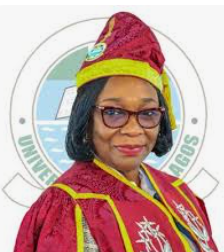
The Vice Chancellor of the University of Lagos, UNILAG, Prof. Folasade Ogunsola, has said Nigeria can tackle healthcare challenges if indigenous research capacity is strengthened and home grown innovations are developed.
She stated this yesterday at the opening ceremony of the 12th annual scientific conference of the Faculty of Basic Medical Sciences, College of Medicine of the University of Lagos held at the Idi Araba campus of the University.
Represented by the Deputy Vice Chancellor, Development Services, Prof. F. E.A Lesi, the VC also emphasized the need to generate the evidence that responds to the realities of our populations.
” For Nigeria and Africa, this question is especially important. Our healthcare systems face persistent communicable diseases, increasing non-communicable disease burdens, emerging infections and challenges associated with limited diagnostic and therapeutic resources. Addressing these challenges requires more than importing technologies and adopting discoveries made elsewhere. We must strengthen indigenous research capacity, develop homegrown innovations and generate evidence that responds to the realities of our populations, “she stated.
Ogunsola commended the Faculty of Basic Medical Sciences for its immense contributions by providing the scientific foundations for understanding diseases, improving diagnostics, developing therapeutic interventions and advancing preventive healthcare.
In his address, the Provost, College Medicine, Prof. Ademola Oremosu, called for a change in the narrative that Basic Medical Sciences was just a pre-clinical hurdle to cross before clinicals, describing the Faculty as the foundation, the engine room and indeed the future of medicine.
He promised that under his tenure, the Faculty would be strengthened, funded and celebrated, adding that “if the root is strong, the tree will stand.”
The Dean of the Faculty, Prof. Akinniyi Osuntoki, noted that the theme ” Strengthening biomedical sciences for innovation and effective outcomes: Strategies for improved healthcare,” was chosen because of the need to translate scientific research into practical impacts.
He listed the four sub-theme to include AI precision research, home grown innovation and Africa-led R&D for health research, from bench to bedside community and bioethics, biosafety and research security.
He charged researchers to ensure that scientific advancement must be accompanied by ethical responsibility.
The Chairman of the occasion, Mr Olaniyi Yusuf, listed five core pillars to be considered in building a robust biomedical ecosystem.
He mentioned the provision of modern infrastructure, human capital development and retention, regularity harmonization and bioethics, translating research into public health policy and sustainable funding.
The Special Guest of Honour, Dr Kayode Opeifa, the Managing Director of the Nigerian Railway Corporation, recalled his days at the College of Medicine where he studied for a Master’s Degree in Biochemistry, and urged youths to appreciate the quality of education they are exposed to in Nigeria.
He noted that when he got to the United States, he was able to excel despite the seeming lack of some teaching facilities at home because he was well taught and grounded in his area of specialty.
The keynote speaker, Dr Kwaku Baryeh, Director, Clinical Chemistry at Eli Lilly and Company, Indiana, United States, called on African researchers to collaborate with one another to achieve results that would place the continent on a higher pedestal.
A former Dean of the Faculty, Prof. S.A Omilabu, was honoured for his immense contributions to the advancement of the Faculty over the years. Papers were presented by researchers from across the continent and beyond.



No comments yet. Start the conversation.