
Fintech remains the biggest recipient of venture capital in Africa’s tech ecosystem, but it is not immune to the sector-wide funding slowdown. In the first half of 2026, African fintech startups raised $488 million across 45 deals, according to TechCabal Insights’ State of Tech in Africa report, a 23.7% drop from the $639 million raised in the same period in 2025.
First Circle Capital, a female-led venture capital firm focused on African fintechs, is positioning itself for the sector’s next phase with what it calls Fintech 2.0, which is a generation of businesses that build on the financial infrastructure established over the past decade, using technology to improve how financial institutions operate and serve customers.
“Ten years ago most fintechs in Africa were payments businesses, focused on building bridge-to-cash distribution networks, aggregating remittance flows or enabling online and in-store payments,” Selma Ribica, co-founder and managing partner at First Circle Capital, told TechCabal in an email on Friday. “The next wave of fintech winners will not simply be existing financial businesses with AI features added on top, but companies built from day one around automation, intelligent decision-making, software-led operations, and radically lower-cost distribution.”
Fifteen years ago, Ribica worked at M-Pesa, which helped bring mobile payments to the mass market and build crucial payment infrastructure on the continent. She co-founded First Circle Capital in 2021 with Agnes Aistleitner and Robert Smith. Now, the firm operates across Kampala, Nairobi, Casablanca, and Cape Town, with a pan-African investment mandate covering markets including Nigeria, Kenya, South Africa, Egypt, Morocco, Uganda, Ghana, and Francophone Africa.
In 2025, First Circle Capital began building its Africa Fund I with a $6 million commitment from the International Finance Corporation (IFC). It announced the fund’s close at $26 million on Wednesday, with subsequent commitments from Bpifrance and Stellar Foundation. Ribica explained that First Circle Capital’s strategy focuses on six sub-segments within fintech, which include insurtech, alternative lending models, interoperability and infrastructure, climate fintech, fintech software-as-a-service (SaaS), and regulatory technology (RegTech). It is also looking for companies that build with artificial intelligence (AI) from the outset, rather than adding AI features to existing financial products.
In this conversation, Ribica explains how First Circle Capital’s Fintech 2.0 thesis differs from the payments era, why First Circle Capital is betting on AI-native businesses, what it looks for in founders, and the deals the firm walks away from. She also discusses the firm’s approach to follow-on investments and who it expects to buy its portfolio companies.
This interview has been edited for length and clarity.
You started with $6 million from IFC about a year ago and closed at $26 million. Your hard cap was $30 million. Why stop at $26 million?
First Circle Fund I team is here for carry, not management fees. I started investing my personal money in African fintechs in 2017 and had great returns from companies like Expensya, THNDR and more. The goal is to optimise performance, not AUM. At the time our most recent LPs committed, BPIFrance and Stellar Foundation, we already had built a well-performing portfolio, and $26 million is to execute our strategy for optimal returns.
You call this “FinTech 2.0.” How is a company you’ll back today different from the payments companies of the last ten years? Why did you select six core areas?
At the time we launched First Circle, the opportunities shifted to building solutions on top of those rails, leveraging technology to deepen financial inclusion for businesses and consumers, and helping African financial institutions leverage lower costs of operations and manage risk, bridging the gap across the industry with new technologies and accelerating digitisation.
First Circle I is a thesis-led fund focusing on six key sub-segments within fintech: Insurtech, Alternative Lending Models, Interoperability & Infrastructure, Climate Fintech, Fintech SaaS, and RegTech. While we believe these areas still represent substantial opportunities for economic and impact returns in Africa, it is important to note that in markets where financial innovation came later, like Morocco, we still back Fintech 1.0 opportunities, as those will be the most lucrative opportunities at the given stage of fintech innovation maturity.
In African markets, where legacy financial infrastructure is often incomplete or inefficient, AI-native fintech companies have the opportunity to leapfrog traditional models and build more scalable, accessible financial services from the ground up.
Describe the founder you’d write a cheque to.
We spend a lot of time understanding founders’ quality of motivation, as well as certain personal characteristics that we believe are highly correlated with success. Founders we back are ambitious yet humble, have a growth mindset and strong ability to self-reflect; they display a track record as top operators, networkers and thinkers who plan for the long-term.
What makes you walk away from a deal even when the numbers look good? Tell me about one deal you passed on and why.
The greatest number of deals we walked away from had one thing in common: founders who want to get rich quick. Building a successful company takes a decade or more, and we never back teams who prepare themselves for less.
You say you want companies that use AI from day one. What does that look like for a pre-seed fintech?
One example is Orca Fraud, a South African AI-native SaaS platform that we backed in 2023. We were the company’s first investors, supporting the founding team at the MVP stage as they developed an AI-powered solution for real-time transaction monitoring and fraud detection.
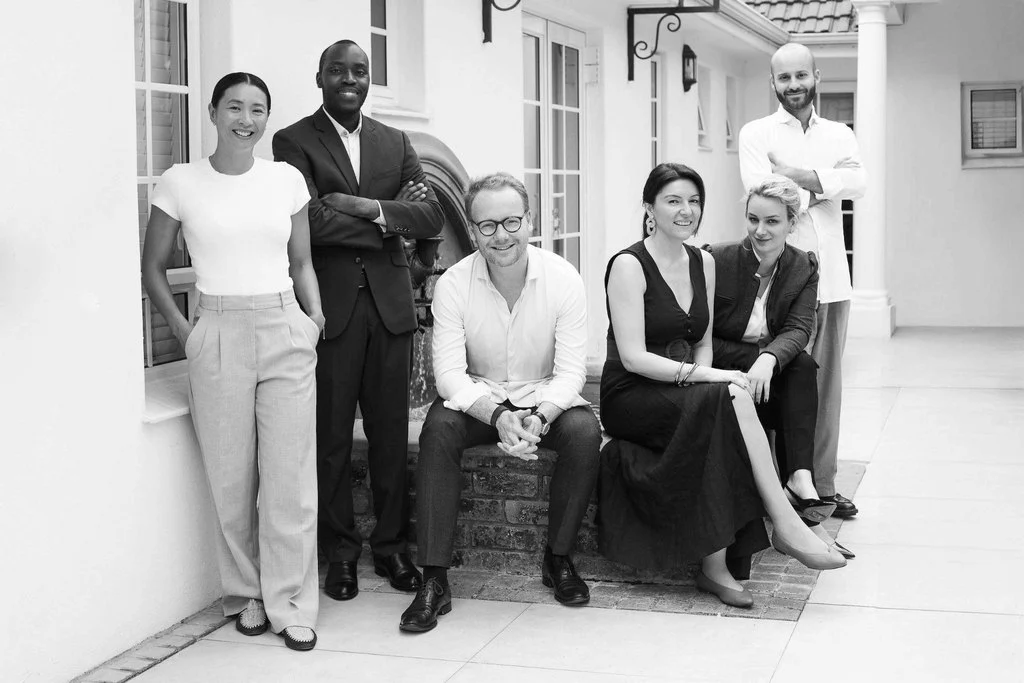 First Circle Capital team. Image source: First Circle Capital.
Apart from money, what do you do for a founder in their first year?
As mentioned previously, we began investing at the onset of the venture capital downturn, which made us particularly conscious of the importance of deploying our capital efficiently and maximising the value we could create for our portfolio companies beyond financial investment alone.
From the outset, we asked ourselves two fundamental questions: what truly moves the needle for fintech businesses at the pre-seed and seed stages, and which unique assets, capabilities and relationships could the First Circle Capital team leverage to make a transformational difference to our portfolio?
Today, we track progress we have made across three key areas: catalysing additional investment, unlocking commercial opportunities and strengthening the operational foundations of our portfolio companies.
We have helped our portfolio companies attract follow-on investment equivalent to 2.2 times the amount of capital we originally invested. On average, our involvement has helped catalyse 50% of each subsequent funding round, rising to 56% when First Circle Capital’s own participation is included.
To date, we have supported 13 portfolio companies in their fundraising efforts, introducing 23 unique investors and helping them secure the additional capital needed to scale their businesses.
Beyond fundraising, we have focused heavily on helping our portfolio companies establish commercial relationships with enterprise customers and high-growth businesses across Africa and internationally. We have facilitated 80 business development introductions, generating 33 active commercial conversations and nine contracts that are already producing revenue.
Collectively, these efforts have created a potential commercial pipeline worth $18.8 million, comprising $1.3 million in contracted revenue, $2.4 million in contracts undergoing final negotiations and a further $15.1 million in advanced discussions. These figures represent cumulative potential contract values over the 2026–2029 period.
Finally, we support our portfolio companies in recruiting senior executives and accessing experienced operators and advisers. Our network includes professionals with experience at organisations such as RedMart, Lazada, Alibaba and Expensya, alongside alumni communities from leading international business schools, including INSEAD, London Business School, Harvard Business School and Wharton.
How much do you put into a first cheque? With 18 companies already backed and about 24 planned, how much of the $26 million is left for new deals, and how much is set aside for follow-on rounds?
We aim for 10% at entry at the pre-seed and seed stages, so our ticket varies from $250,000 to $1.2m. We hold a 40% follow-on reserve.
Most of your money comes from development finance institutions. How do their goals affect which deals you do?
DFI mandates are aligned with our goals: returns and impact come simultaneously and not at the expense of one another. Therefore our investors do not dictate our investment strategy nor deals we chose to do. The decision to invest is based on the company’s ability to transform financial services for the better and generate top decile returns for our investors.
Who do you expect to buy your companies: banks, telcos or bigger fintechs?
We plan for exits from day 1, and work on improving exit chances for our portfolio continuously. We expect the bulk of exits will come from secondary and strategic acquisitions in the financial services industry, while there is also a possibility of a few IPOs.




No comments yet. Start the conversation.