
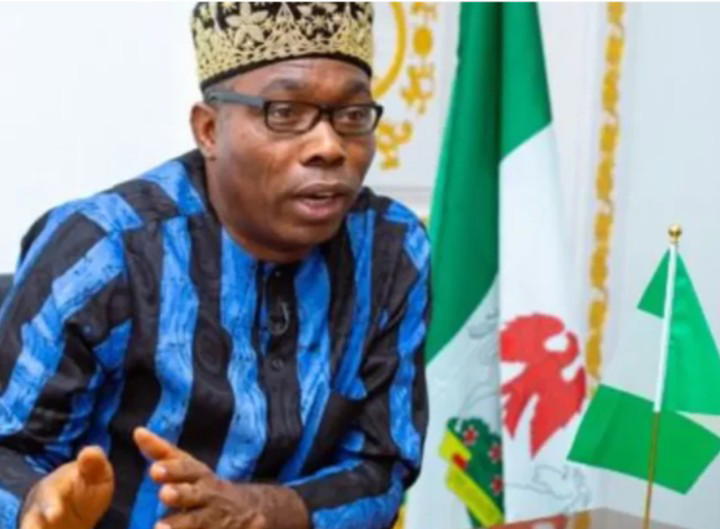
*ADEBAYO’S ₦200 PETROL REVOLUTION
By Adedayo Olalekan
One of the greatest contradictions in Nigeria’s economic management today is that a country blessed with crude oil, endowed with enormous energy resources and home to millions of people whose incomes are earned predominantly in naira has continued to operate a fuel pricing system heavily influenced by the dollar.
For ordinary Nigerians, the consequences are painfully familiar. Every adjustment in petrol prices triggers a chain reaction across the economy. Transportation becomes more expensive, food prices rise, businesses struggle with higher operating costs, and the purchasing power of households shrinks further. From the roadside trader to the civil servant, from the commercial driver to the small-scale manufacturer, virtually everyone bears the burden.
But a fundamental question remains: Why should Nigerians continue to pay for petrol at prices determined by dollar-based calculations when the country earns its revenues, pays the salaries of its workers and conducts the greater part of its domestic economic activities in naira?
This is precisely the economic contradiction that Prince (Dr.) Adewole Adebayo, presidential candidate of the Social Democratic Party (SDP), is challenging with his proposal to make petrol affordable at ₦200 per litre without resorting to government fuel subsidies.
Unlike the familiar political rhetoric that promises cheaper fuel without explaining how such promises will be achieved, Adebayo is advancing an argument that goes to the very foundation of Nigeria’s energy and economic policy: the country must move away from an economic arrangement that transfers the burden of its structural inefficiencies directly to its citizens.
His position is not simply about reducing the price of petrol. It is about questioning the assumptions, cost structures and policy choices that have made energy unnecessarily expensive for a country with Nigeria’s natural advantages.
The problem is bigger than fuel prices.
Fuel is not an ordinary commodity in Nigeria. It is a major determinant of the cost of living and the productivity of the entire economy. When petrol prices rise, the effects extend far beyond filling stations. They influence the cost of moving agricultural produce from farms to markets, transporting raw materials to factories, distributing finished products and delivering essential services.
For a country already battling inflation, unemployment, poverty and declining household purchasing power, expensive energy becomes an additional tax on survival.
Adebayo’s intervention therefore deserves attention because it approaches the fuel question from the perspective of economic justice and national productivity rather than merely treating it as a market-pricing argument.
The central issue is whether Nigeria should continue to accept an energy pricing structure that exposes its citizens to the full consequences of foreign exchange volatility, imported inputs and avoidable production inefficiencies, even when the country possesses the resources and capacity to develop a more affordable domestic energy system.
Affordable petrol without subsidies: The Adebayo proposition.
Perhaps the most compelling aspect of Adebayo’s position is his insistence that affordable petrol does not necessarily have to mean government subsidy.
For years, Nigerians have been presented with what appears to be a difficult choice: either pay high prices for fuel or return to a subsidy regime that places enormous pressure on public finances, encourages rent-seeking and creates opportunities for corruption.
Adebayo is questioning this apparent dilemma.
His ₦200-per-litre proposition challenges the country to rethink how crude oil is produced, refined, processed, distributed and priced. It places emphasis on domestic value addition, efficient production, local refining capacity, reduced operational waste and a pricing framework that prioritises the Nigerian economy.
The argument is straightforward: rather than exporting raw resources, exposing the domestic market to international cost pressures and subsequently asking Nigerians to pay more for refined products, Nigeria should build an energy value chain that allows its natural resources to serve its domestic economy more effectively.
This does not mean that production, refining, transportation and distribution costs disappear simply because crude oil is produced locally. Neither does it mean that exchange-rate realities can be ignored. Rather, it raises the important question of whether those costs can be reduced through deliberate policy, improved efficiency, domestic capacity and a more competitive production environment.
That is where Adebayo’s proposition becomes a broader economic conversation.
From consumption to production.
Adebayo’s argument also reflects a fundamental difference between managing an economy and transforming one.
An economy cannot achieve sustainable growth when the cost of energy continuously undermines the productivity of its citizens and businesses. Small businesses cannot expand when a substantial portion of their earnings goes into powering generators and transporting goods. Farmers cannot become competitive when the cost of moving produce consumes their margins. Manufacturers cannot create sufficient employment when energy costs make locally produced goods more expensive than imported alternatives.
Affordable energy, therefore, is not merely a welfare policy. It is an economic growth strategy.
If petrol can be made genuinely affordable through a sustainable domestic production and pricing arrangement, the benefits could extend across transportation, agriculture, manufacturing, commerce and services.
It could improve business margins, support job creation, moderate inflationary pressures and restore some purchasing power to households.
This is the larger economic promise embedded in Adebayo’s position: energy policy must serve production, not simply revenue collection or the interests of market operators.
A different approach to economic leadership.
What distinguishes Adebayo’s intervention is his willingness to challenge an economic orthodoxy that many Nigerians have come to regard as inevitable.
He is effectively asking Nigerians to look beyond the immediate argument over whether petrol should be subsidised or deregulated and examine the deeper question of how a resource-rich country can organise its energy sector to deliver affordable products to its people.
His position is consistent with the central message of his policy blueprint, Farewell to Poverty and Insecurity: Governance and Accelerated Development – Blueprint of a New Nigeria, 2027–2031.
The underlying philosophy is that Nigeria must move from an economy of excuses to an economy of possibilities, where government policies are measured by their impact on the lives of citizens and their ability to create productive opportunities.
Of course, a ₦200-per-litre target must be supported by a transparent implementation framework detailing crude supply arrangements, refinery-gate costs, foreign exchange exposure, logistics, distribution margins and the commercial sustainability of the entire value chain. Nigerians deserve to know not just what is possible, but how it will be achieved without creating hidden liabilities or another unsustainable subsidy arrangement.
That is precisely the kind of scrutiny a serious national economic proposal should welcome.
The 2027 choice: More than a contest over political power.
As Nigeria approaches another defining electoral moment, the conversation should be about more than political personalities, alliances and campaign promises. It should be about competing economic ideas and the capacity of political leaders to offer practical alternatives to the challenges confronting the country.
Adebayo is putting forward an argument that deserves serious national consideration: Nigeria should not be permanently condemned to expensive energy simply because successive administrations have failed to organise its resources, infrastructure and productive capacity efficiently.
The question is not whether Nigerians deserve affordable petrol. They unquestionably do. The question is whether the country has the political courage and economic discipline to build a system that makes affordability sustainable.
For Adebayo, the answer must begin with a government that places the interests of Nigerians at the centre of energy policy, strengthens domestic production and ensures that the nation’s natural resources translate into tangible improvements in the lives of its people.
Ultimately, the debate over ₦200 petrol is bigger than the price displayed at filling stations. It is a debate about who the Nigerian economy is designed to serve.
Is it designed primarily around the convenience of the market, the interests of powerful economic operators and the demands of international pricing structures, or should it be organised to promote the welfare, productivity and prosperity of Nigerians?
Adebayo is making his choice clear.
Nigeria must produce more, refine more, waste less and ensure that its resources work for its people.
It is time to stop treating affordable energy as an impossible dream. It is time to rethink the system, restore economic dignity and build a country where hard work can translate into prosperity.
With Prince Adewole Adebayo and the SDP, the promise is not simply cheaper petrol. It is a more productive, self-reliant and economically just Nigeria.
FAREWELL TO POVERTY AND INSECURITY!




No comments yet. Start the conversation.